

Modern Era
Chapter 26: Crisis of Populism 2017 ― Today


Make America Great Again 2017-2021
Build Back Better 2021-2025
America First 2025-Today
War on Terror 2001 ― 2017
Yet to Happen

Documents
Master Index


04/12/1776
The Halifax Resolves authorized North Carolina’s delegates to the Continental Congress to support independence from Great Britain, marking the first official colonial endorsement of separation. Although no roll call survives, leading North Carolina patriots likely present — including Richard Caswell, Joseph Hewes, and William Hooper — underscore the resolves’ role in paving the way for the Declaration of Independence.
North Carolina Colonial Assembly
Halifax Resolves
Biographies

William McKinley (1843-1901) was the 25th president of the United States, serving from 1897 to 1901. His presidency was defined by protective tariffs, the adoption of the gold standard, and the Spanish-American War, which resulted in the United States acquiring Puerto Rico, Guam, and the Philippines. Assassinated in 1901, McKinley left a legacy as the president who helped transform the United States into an emerging world power at the dawn of the twentieth century.
William
McKinley
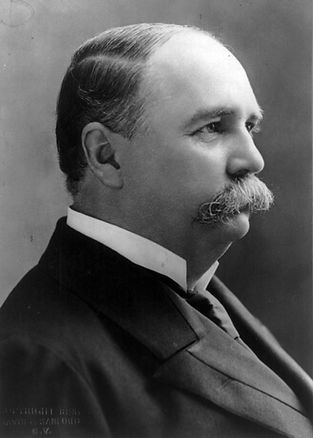
Garret Hobart (1844-1899) was a New Jersey lawyer, businessman, and Republican legislative leader who became William McKinley's vice president in 1897. He was an unusually active vice president who worked closely with McKinley until declining health forced him from public activity. Hobart died in 1899, leaving the vice presidency vacant until Theodore Roosevelt took the office in 1901.
Garret
Hobart

Charles W. Fairbanks (1852-1918) was a successful railroad attorney who became one of Indiana's leading Republicans and served in the U.S. Senate. He became Theodore Roosevelt's vice president in 1905 and presided over the Senate during Roosevelt's second term. Fairbanks later ran unsuccessfully for vice president again in 1916 and died in 1918.
Charles
Fairbanks

Thomas R. Marshall (1854-1925) was an Indiana lawyer and governor who became Woodrow Wilson's vice president in 1913. He served for eight years, including during World War I and the constitutional uncertainty surrounding Wilson's incapacitation in 1919. After leaving office, Marshall returned to law and public speaking before dying in Washington in 1925.
Thomas
Marshall
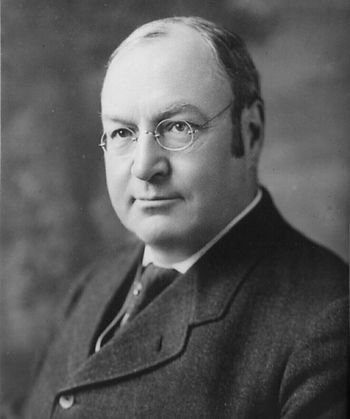
James S. Sherman (1855-1912) was a New York lawyer and longtime Republican congressman who became William Howard Taft's vice president in 1909. He served as a congressional leader and presided over the Senate while the Republican Party increasingly divided between Taft and Theodore Roosevelt. Sherman died six days before the 1912 election, and the Republican Party substituted Nicholas Murray Butler as his electoral running mate.
James
Sherman

Woodrow Wilson (1856-1924) was the 28th president of the United States, serving from 1913 to 1921. His administration established the Federal Reserve, strengthened federal regulation of business, and ultimately brought the United States into World War I, after which Wilson championed his Fourteen Points and the League of Nations. His legacy is complicated by his administration’s racial segregation, suppression of speech, and expansion of presidential power.
Woodrow
Wilson