Search this site
1696 results found with an empty search
- JFK on Face the Nation (4/3/1960)
JFK on Face the Nation (4/3/1960)
- Tenth and Final Jan. 6 Hearing
Tenth and Final Jan. 6 Hearing
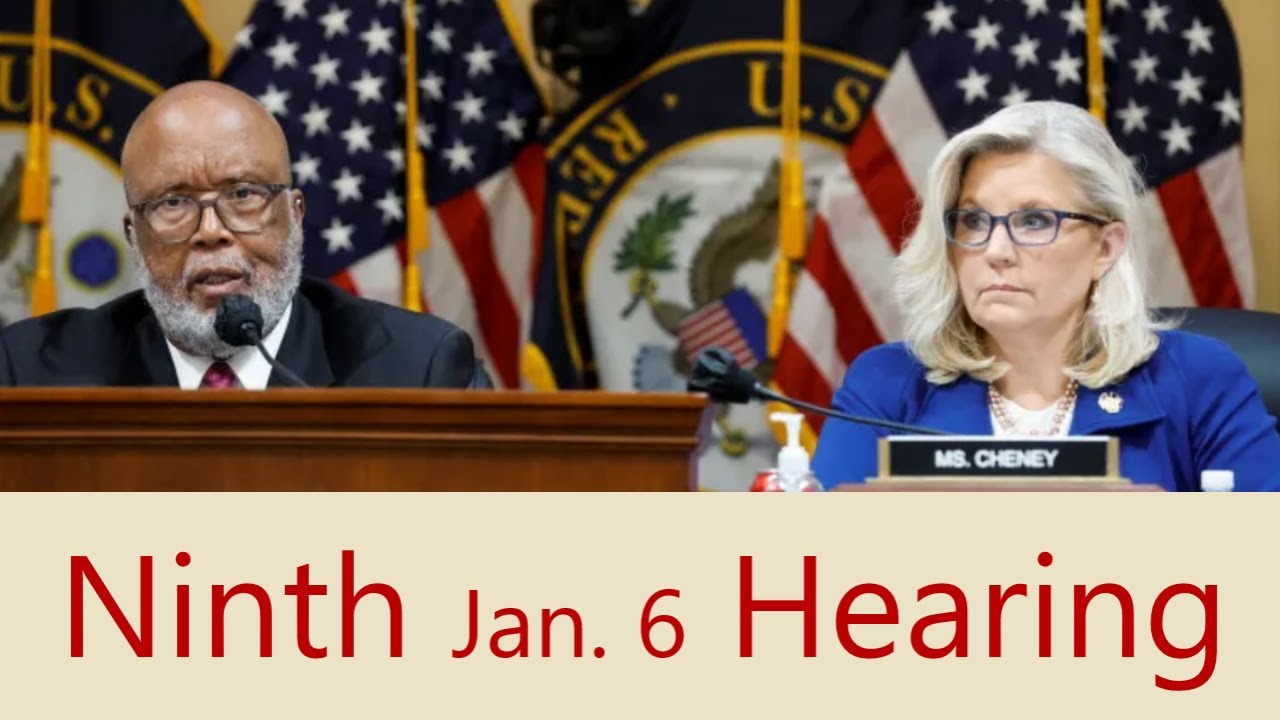
- Ninth Jan. 6 Hearing
Ninth Jan. 6 Hearing
- William J. Bryan Concedes the Election 1908
November 05, 1908 The election has gone against us by a decisive majority. The returns are not all in, and it is impossible at the present time to analyze them or to say what causes contributed most to the Republican victory. We made our fight upon a platform which embodied what we believed to be good for the American people, but it is for the people themselves to decide what laws they desire and what methods of Government they prefer. I have faith that the publicity which we asked for will yet commend itself to the American people; that the election of Senators by the people will be secured; that the iniquities of the trusts will arouse an opposition that will result in the elimination of the principle of private monopoly. I am confident that the people will see the necessity for the labor legislation and the tariff reduction which our platform demanded. I am confident, too, that the educational work done in this campaign will result in securing greater protection to bank depositors. The above are the most prominent reforms for which we labored, and I believe that these reforms will yet come together with more effective regulations and railroads and independence for the Filipinos. I desire to commend the work of our National Committee. I am entirely satisfied with Mr. Mack as the Chairman and with the members of the committee. I do not see what they could have done more than they did, and as for myself, I put forth every effort in my power to secure victory for our cause. The nomination came from the hands of the voters, I have obeyed their command and have led as best I could. Words will not express my gratitude for the devotion which has been shown by millions of Democrats during the last twelve years. Neither am I able to adequately express my appreciation for the kind words which have been spoken since the election. If I could regard the defeat as purely a personal one, I would consider it a blessing rather than a misfortune, for I am relieved of the burdens and responsibilities of an office that is attractive only in proportion as it gives an opportunity to render a larger public service. But I shall serve as willingly in a private capacity as in a public one. God does not require great things of us. He only requires that we improve the opportunities that are presented, and I shall be glad to improve the opportunities for service presented by private life. In this hour of National defeat I find some consolation in the cordial support given by my neighbors, by the citizens of Lincoln and by the people of the State of Nebraska. With a Democratic Governor and a Democratic Legislature we shall be able to put into practice so much of the Denver platform as relates to State legislation, and I trust that our State will set an example that will be an influence for good in the Nation. Source: https://www.presidency.ucsb.edu/documents/statement-conceding-the-presidential-election-4
- Treaty of Paris of 1763
The definitive Treaty of Peace and Friendship between his Britannick Majesty, the Most Christian King, and the King of Spain. Concluded at Paris the 10th day of February, 1763. To which the King of Portugal acceded on the same day. (Printed from the Copy.) In the Name of the Most Holy and Undivided Trinity, Father, Son, and Holy Ghost. So be it. Be it known to all those whom it shall, or may, in any manner, belong, It has pleased the Most High to diffuse the spirit of union and concord among the Princes, whose divisions had spread troubles in the four parts of the world, and to inspire them with the inclination to cause the comforts of peace to succeed to the misfortunes of a long and bloody war, which having arisen between England and France during the reign of the Most Serene and Most Potent Prince, George the Second, by the grace of God, King of Great Britain, of glorious memory, continued under the reign of the Most Serene and Most Potent Prince, George the Third, his successor, and, in its progress, communicated itself to Spain and Portugal: Consequently, the Most Serene and Most Potent Prince, George the Third, by the grace of God, King of Great Britain, France, and Ireland, Duke of Brunswick and Lunenbourg, Arch Treasurer and Elector of the Holy Roman Empire; the Most Serene and Most Potent Prince, Lewis the Fifteenth, by the grace of God, Most Christian King; and the Most Serene and Most Potent Prince, Charles the Third, by the grace of God, King of Spain and of the Indies, after having laid the foundations of peace in the preliminaries signed at Fontainebleau the third of November last; and the Most Serene and Most Potent Prince, Don Joseph the First, by the grace of God, King of Portugal and of the Algarves, after having acceded thereto, determined to compleat, without delay, this great and important work. For this purpose, the high contracting parties have named and appointed their respective Ambassadors Extraordinary and Ministers Plenipotentiary, viz. his Sacred Majesty the King of Great Britain, the Most Illustrious and Most Excellent Lord, John Duke and Earl of Bedford, Marquis of Tavistock, c. his Minister of State, Lieutenant General of his Armies, Keeper of his Privy Seal, Knight of the Most Noble Order of the Garter, and his Ambassador Extraordinary and Minister Plenipotentiary to his Most Christian Majesty; his Sacred Majesty the Most Christian King, the Most Illustrious and Most Excellent Lord, Csar Gabriel de Choiseul, Duke of Praslin, Peer of France, Knight of his Orders, Lieutenant General of his Armies and of the province of Britanny, Counsellor of all his Counsils, and Minister and Secretary of State, and of his Commands and Finances: his Sacred Majesty the Catholick King, the Most Illustrious and Most Excellent Lord, Don Jerome Grimaldi, Marquis de Grimaldi, Knight of the Most Christian King's Orders, Gentleman of his Catholick Majesty's Bedchamber in Employment, and his Ambassador Extraordinary to his Most Christian Majesty; his Sacred Majesty the Most Faithful King, the Most Illustrious and Most Excellent Lord, Martin de Mello and Castro, Knight professed of the Order of Christ, of his Most Faithful Majesty's Council, and his Ambassador and Minister Plenipotentiary to his Most Christian Majesty. Who, after having duly communicated to each other their full powers, in good form, copies whereof are transcribed at the end of the present treaty of peace, have agreed upon the articles, the tenor of which is as follows: Article I. There shall be a Christian, universal, and perpetual peace, as well by sea as by land, and a sincere and constant friendship shall be re established between their Britannick, Most Christian, Catholick, and Most Faithful Majesties, and between their heirs and successors, kingdoms, dominions, provinces, countries, subjects, and vassals, of what quality or condition soever they be, without exception of places or of persons: So that the high contracting parties shall give the greatest attention to maintain between themselves and their said dominions and subjects this reciprocal friendship and correspondence, without permitting, on either side, any kind of hostilities, by sea or by land, to be committed from henceforth, for any cause, or under any pretence whatsoever, and every thing shall be carefully avoided which might hereafter prejudice the union happily reÂestablished, applying themselves, on the contrary, on every occasion, to procure for each other whatever may contribute to their mutual glory, interests, and advantages, without giving any assistance or protection, directly or indirectly, to those who would cause any prejudice to either of the high contracting parties: there shall be a general oblivion of every thing that may have been done or committed before or since the commencement of the war which is just ended. II. The treaties of Westphalia of 1648; those of Madrid between the Crowns of Great Britain and Spain of 1661, and 1670; the treaties of peace of Nimeguen of 1678, and 1679; of Ryswick of 1697; those of peace and of commerce of Utrecht of 1713; that of Baden of 1714; the treaty of the triple alliance of the Hague of 1717; that of the quadruple alliance of London of 1118; the treaty of peace of Vienna of 1738; the definitive treaty of Aix la Chapelle of 1748; and that of Madrid, between the Crowns of Great Britain and Spain of 1750: as well as the treaties between the Crowns of Spain and Portugal of the 13th of February, 1668; of the 6th of February, 1715; and of the 12th of February, 1761; and that of the 11th of April, 1713, between France and Portugal with the guaranties of Great Britain, serve as a basis and foundation to the peace, and to the present treaty: and for this purpose they are all renewed and confirmed in the best form, as well as all the general, which subsisted between the high contracting parties before the war, as if they were inserted here word for word, so that they are to be exactly observed, for the future, in their whole tenor, and religiously executed on all sides, in all their points, which shall not be derogated from by the present treaty, notwithstanding all that may have been stipulated to the contrary by any of the high contracting parties: and all the said parties declare, that they will not suffer any privilege, favour, or indulgence to subsist, contrary to the treaties above confirmed, except what shall have been agreed and stipulated by the present treaty. III. All the prisoners made, on all sides, as well by land as by sea, and the hostages carried away or given during the war, and to this day, shall be restored, without ransom, six weeks, at least, to be computed from the day of the exchange of the ratification of the present treaty, each crown respectively paying the advances which shall have been made for the subsistance and maintenance of their prisoners by the Sovereign of the country where they shall have been detained, according to the attested receipts and estimates and other authentic vouchers which shall be furnished on one side and the other. And securities shall be reciprocally given for the payment of the debts which the prisoners shall have contracted in the countries where they have been detained until their entire liberty. And all the ships of war and merchant vessels Which shall have been taken since the expiration of the terms agreed upon for the cessation of hostilities by sea shall likewise be restored, bon fide, with all their crews and cargoes: and the execution of this article shall be proceeded upon immediately after the exchange of the ratifications of this treaty. IV. His Most Christian Majesty renounces all pretensions which he has heretofore formed or might have formed to Nova Scotia or Acadia in all its parts, and guaranties the whole of it, and with all its dependencies, to the King of Great Britain: Moreover, his Most Christian Majesty cedes and guaranties to his said Britannick Majesty, in full right, Canada, with all its dependencies, as well as the island of Cape Breton, and all the other islands and coasts in the gulph and river of St. Lawrence, and in general, every thing that depends on the said countries, lands, islands, and coasts, with the sovereignty, property, possession, and all rights acquired by treaty, or otherwise, which the Most Christian King and the Crown of France have had till now over the said countries, lands, islands, places, coasts, and their inhabitants, so that the Most Christian King cedes and makes over the whole to the said King, and to the Crown of Great Britain, and that in the most ample manner and form, without restriction, and without any liberty to depart from the said cession and guaranty under any pretence, or to disturb Great Britain in the possessions above mentioned. His Britannick Majesty, on his side, agrees to grant the liberty of the Catholick religion to the inhabitants of Canada: he will, in consequence, give the most precise and most effectual orders, that his new Roman Catholic subjects may profess the worship of their religion according to the rites of the Romish church, as far as the laws of Great Britain permit. His Britannick Majesty farther agrees, that the French inhabitants, or others who had been subjects of the Most Christian King in Canada, may retire with all safety and freedom wherever they shall think proper, and may sell their estates, provided it be to the subjects of his Britannick Majesty, and bring away their effects as well as their persons, without being restrained in their emigration, under any pretence whatsoever, except that of debts or of criminal prosecutions: The term limited for this emigration shall be fixed to the space of eighteen months, to be computed from the day of the exchange of the ratification of the present treaty. V. The subjects of France shall have the liberty of fishing and drying on a part of the coasts of the island of Newfoundland, such as it is specified in the XIIIth article of the treaty of Utrecht; which article is renewed and confirmed by the present treaty, (except what relates to the island of Cape Breton, as well as to the other islands and coasts in the mouth and in the gulph of St. Lawrence:) And his Britannick Majesty consents to leave to the subjects of the Most Christian King the liberty of fishing in the gulph of St. Lawrence, on condition that the subjects of France do not exercise the said fishery but at the distance of three leagues from all the coasts belonging to Great Britain, as well those of the continent as those of the islands situated in the said gulph of St. Lawrence. And as to what relates to the fishery on the coasts of the island of Cape Breton, out of the said gulph, the subjects of the Most Christian King shall not be permitted to exercise the said fishery but at the distance of fifteen leagues from the coasts of the island of Cape Breton; and the fishery on the coasts of Nova Scotia or Acadia, and every where else out of the said gulph, shall remain on the foot of former treaties. VI. The King of Great Britain cedes the islands of St. Pierre and Macquelon, in full right, to his Most Christian Majesty, to serve as a shelter to the French fishermen; and his said Most Christian Majesty engages not to fortify the said islands; to erect no buildings upon them but merely for the conveniency of the fishery; and to keep upon them a guard of fifty men only for the police. VII. In order to reÂestablish peace on solid and durable foundations, and to remove for ever all subject of dispute with regard to the limits of the British and French territories on the continent of America; it is agreed, that, for the future, the confines between the dominions of his Britannick Majesty and those of his Most Christian Majesty, in that part of the world, shall be fixed irrevocably by a line drawn along the middle of the River Mississippi, from its source to the river Iberville, and from thence, by a line drawn along the middle of this river, and the lakes Maurepas and Pontchartrain to the sea; and for this purpose, the Most Christian King cedes in full right, and guaranties to his Britannick Majesty the river and port of the Mobile, and every thing which he possesses, or ought to possess, on the left side of the river Mississippi, except the town of New Orleans and the island in which it is situated, which shall remain to France, provided that the navigation of the river Mississippi shall be equally free, as well to the subjects of Great Britain as to those of France, in its whole breadth and length, from its source to the sea, and expressly that part which is between the said island of New Orleans and the right bank of that river, as well as the passage both in and out of its mouth: It is farther stipulated, that the vessels belonging to the subjects of either nation shall not be stopped, visited, or subjected to the payment of any duty whatsoever. The stipulations inserted in the IVth article, in favour of the inhabitants of Canada shall also take place with regard to the inhabitants of the countries ceded by this article. VIII. The King of Great Britain shall restore to France the islands of Guadeloupe, of Mariegalante, of Desirade, of Martinico, and of Belleisle; and the fortresses of these islands shall be restored in the same condition they were in when they were conquered by the British arms, provided that his Britannick Majesty's subjects, who shall have settled in the said islands, or those who shall have any commercial affairs to settle there or in other places restored to France by the present treaty, shall have liberty to sell their lands and their estates, to settle their affairs, to recover their debts, and to bring away their effects as well as their persons, on board vessels, which they shall be permitted to send to the said islands and other places restored as above, and which shall serve for this use only, without being restrained on account of their religion, or under any other pretence whatsoever, except that of debts or of criminal prosecutions: and for this purpose, the term of eighteen months is allowed to his Britannick Majesty's subjects, to be computed from the day of the exchange of the ratifications of the present treaty; but, as the liberty granted to his Britannick Majesty's subjects, to bring away their persons and their effects, in vessels of their nation, may be liable to abuses if precautions were not taken to prevent them; it has been expressly agreed between his Britannick Majesty and his Most Christian Majesty, that the number of English vessels which have leave to go to the said islands and places restored to France, shall be limited, as well as the number of tons of each one; that they shall go in ballast; shall set sail at a fixed time; and shall make one voyage only; all the effects belonging to the English being to be embarked at the same time. It has been farther agreed, that his Most Christian Majesty shall cause the necessary passports to be given to the said vessels; that, for the greater security, it shall be allowed to place two French clerks or guards in each of the said vessels, which shall be visited in the landing places and ports of the said islands and places restored to France, and that the merchandize which shall be found t herein shall be confiscated. IX. The Most Christian King cedes and guaranties to his Britannick Majesty, in full right, the islands of Grenada, and the Grenadines, with the same stipulations in favour of the inhabitants of this colony, inserted in the IVth article for those of Canada: And the partition of the islands called neutral, is agreed and fixed, so that those of St. Vincent, Dominico, and Tobago, shall remain in full right to Great Britain, and that of St. Lucia shall be delivered to France, to enjoy the same likewise in full right, and the high contracting parties guaranty the partition so stipulated. X. His Britannick Majesty shall restore to France the island of Goree in the condition it was in when conquered: and his Most Christian Majesty cedes, in full right, and g uaranties to the King of Great Britain the river Senegal, with the forts and factories of St. Lewis, Podor, and Galam, and with all the rights and dependencies of the said river Senegal. XI. In the East Indies Great Britain shall restore to France, in the condition they are now in, the different factories which that Crown possessed, as well as on the coast of Coromandel and Orixa as on that of Malabar, as also in Bengal, at the beginning of the year 1749. And his Most Christian Majesty renounces all pretension to the acquisitions which he has made on the coast of Coromandel and Orixa since the said beginning of the year 1749. His Most Christian Majesty shall restore, on his side, all that he may have conquered from Great Britain in the East Indies during the present war; and will expressly cause Nattal and Tapanoully, in the island of Sumatra, to be restored; he engages farther, not to erect fortifications, or to keep troops in any part of the dominions of the Subah of Bengal. And in order to preserve future peace on the coast of Coromandel and Orixa, the English and French shall acknowledge Mahomet Ally Khan for lawful Nabob of the Carnatick, and Salabat Jing for lawful Subah of the Decan; and both parties shall renounce all demands and pretensions of satisfaction with which they might charge each other, or their Indian allies, for the depredations or pillage committed on the one side or on the other during the war. XII. The island of Minorca shall be restored to his Britannick Majesty, as well as Fort St. Philip, in the same condition they were in when conquered by the arms of the Most Christian King; and with the artillery which was there when the said island and the said fort were taken. XIII. The town and port of Dunkirk shall be put into the state fixed by the last treaty of Aix la Chapelle, and by former treaties. The Cunette shall be destroyed immediately after the exchange of the ratifications of the present treaty, as well as the forts and batteries which defend the entrance on the side of the sea; and provision shall be made at the same time for the wholesomeness of the air, and for the health of the inhabitants, by some other means, to the satisfaction of the King of Great Britain. XIV. France shall restore all the countries belonging to the Electorate of Hanover, to the Landgrave of Hesse, to the Duke of Brunswick, and to the Count of La Lippe Buckebourg, which are or shall be occupied by his Most Christian Majesty's arms: the fortresses of these different countries shall be restored in the same condition they were in when conquered by the French arms; and the pieces of artillery, which shall have been carried elsewhere, shall be replaced by the same number, of the same bore, weight and metal. XV. In case the stipulations contained in the XIIIth article of the preliminaries should not be compleated at the time of the signature of the present treaty, as well with regard to the evacuations to be made by the armies of France of the fortresses of Cleves, Wezel, Guelders, and of all the countries belonging to the King of Prussia, as with regard to the evacuations to be made by the British and French armies of the countries which they occupy in Westphalia, Lower Saxony, on the Lower Rhine, the Upper Rhine, and in all the empire; and to the retreat of the troops into the dominions of their respective Sovereigns: their Britannick and Most Christian Majesties promise to proceed, bon fide, with all the dispatch the case will permit of to the said evacuations, the entire completion whereof they stipulate before the 15th of March next, or sooner if it can be done; and their Britannick and Most Christian Majesties farther engage and promise to each other, not to furnish any succours of any kind to their respective allies who shall continue engaged in the war in Germany. XVI. The decision of the prizes made in time of peace by the subjects of Great Britain, on the Spaniards, shall be referred to the Courts of Justice of the Admiralty of Great Britain, conformably to the rules established among all nations, so that the validity of the said prizes, between the British and Spanish nations, shall be decided and judged, according to the law of nations, and according to treaties, in the Courts of Justice of the nation who shall have made the capture. XVII. His Britannick Majesty shall cause to be demolished all the fortifications which his subjects shall have erected in the bay of Honduras, and other places of the territory of Spain in that part of the world, four months after the ratification of the present treaty; and his Catholick Majesty shall not permit his Britannick Majesty's subjects, or their workmen, to be disturbed or molested under any pretence whatsoever in the said places, in their occupation of cutting, loading, and carrying away logÂwood; and for this purpose, they may build, without hindrance, and occupy, without interruption, the houses and magazines necessary for them, for their families, and for their effects; and his Catholick Majesty assures to them, by this article, the full enjoyment of those advantages and powers on the Spanish coasts and territories, as above stipulated, immediately after the ratification of the present treaty. XVIII. His Catholick Majesty desists, as well for himself as for his successors, from all pretension which he may have formed in favour of the Guipuscoans, and other his subjects, to the right of fishing in the neighbourhood of the island of Newfoundland. XIX. The King of Great Britain shall restore to Spain all the territory which he has conquered in the island of Cuba, with the fortress of the Havannah; and this fortress, as well as all the other fortresses of the said island, shall be restored in the same condition they were in when conquered by his Britannick Majesty's arms, provided that his Britannick Majesty's subjects who shall have settled in the said island, restored to Spain by the present treaty, or those who shall have any commercial affairs to settle there, shall have liberty to sell their lands and their estates, to settle their affairs, recover their debts, and to bring away their effects, as well as their persons, on board vessels which they shall be permitted to send to the said island restored as above, and which shall serve for that use only, without being restrained on account of their religion, or under any other pretence whatsoever, except that of debts or of criminal prosecutions: And for this purpose, the term of eighteen months is allowed to his Britannick Majesty's subjects, to be computed from the day of the exchange of the ratifications of the present treaty: but as the liberty granted to his Britannick Majesty's subjects, to bring away their persons and their effects, in vessels of their nation, may be liable to abuses if precautions were not taken to prevent them; it has been expressly agreed between his Britannick Majesty and his Catholick Majesty, that the number of English vessels which shall have leave to go to the said island restored to Spain shall be limited, as well as the number of tons of each one; that they shall go in ballast; shall set sail at a fixed time; and shall make one voyage only; all the effects belonging to the English being to be embarked at the same time: it has been farther agreed, that his Catholick Majesty shall cause the necessary passports to be given to the said vessels; that for the greater security, it shall be allowed to place two Spanish clerks or guards in each of the said vessels, which shall be visited in the landing places and ports of the said island restored to Spain, and that the merchandize which shall be found therein shall be confiscated. XX. In consequence of the restitution stipulated in the preceding article, his Catholick Majesty cedes and guaranties, in full right, to his Britannick Majesty, Florida, with Fort St. Augustin, and the Bay of Pensacola, as well as all that Spain possesses on the continent of North America, to the East or to the South East of the river Mississippi. And, in general, every thing that depends on the said countries and lands, with the sovereignty, property, possession, and all rights, acquired by treaties or otherwise, which the Catholick King and the Crown of Spain have had till now over the said countries, lands, places, and their inhabitants; so that the Catholick King cedes and makes over the whole to the said King and to the Crown of Great Britain, and that in the most ample manner and form. His Britannick Majesty agrees, on his side, to grant to the inhabitants of the countries above ceded, the liberty of the Catholick religion; he will, consequently, give the most express and the most effectual orders that his new Roman Catholic subjects may profess the worship of their religion according to the rites of the Romish church, as far as the laws of Great Britain permit. His Britannick Majesty farther agrees, that the Spanish inhabitants, or others who had been subjects of the Catholick King in the said countries, may retire, with all safety and freedom, wherever they think proper; and may sell their estates, provided it be to his Britannick Majesty's subjects, and bring away their effects, as well as their persons without being restrained in their emigration, under any pretence whatsoever, except that of debts, or of criminal prosecutions: the term limited for this emigration being fixed to the space of eighteen months, to be computed from the day of the exchange of the ratifications of the present treaty. It is moreover stipulated, that his Catholick Majesty shall have power to cause all the effects that may belong to him, to be brought away, whether it be artillery or other things. XXI. The French and Spanish troops shall evacuate all the territories, lands, towns, places, and castles, of his Most faithful Majesty in Europe, without any reserve, which shall have been conquered by the armies of France and Spain, and shall restore them in the same condition they were in when conquered, with the same artillery and ammunition, which were found there: And with regard to the Portuguese Colonies in America, Africa, or in the East Indies, if any change shall have happened there, all things shall be restored on the same footing they were in, and conformably to the preceding treaties which subsisted between the Courts of France, Spain, and Portugal, before the present war. XXII. All the papers, letters, documents, and archives, which were found in the countries, territories, towns and places that are restored, and those belonging to the countries ceded, shall be, respectively and bon fide, delivered, or furnished at the same time, if possible, that possession is taken, or, at latest, four months after the exchange of the ratifications of the present treaty, in whatever places the said papers or documents may be found. XXIII. All the countries and territories, which may have been conquered, in whatsoever part of the world, by the arms of their Britannick and Most Faithful Majesties, as well as by those of their Most Christian and Catholick Majesties, which are not included in the present treaty, either under the title of cessions, or under the title of restitutions, shall be restored without difficulty, and without requiring any compensations. XXIV. As it is necessary to assign a fixed epoch for the restitutions and the evacuations, to be made by each of the high contracting parties, it is agreed, that the British and French troops shall compleat, before the 15th of March next, all that shall remain to be executed of the XIIth and XIIIth articles of the preliminaries, signed the 3d day of November last, with regard to the evacuation to be made in the Empire, or elsewhere. The island of Belleisle shall be evacuated six weeks after the exchange of the ratifications of the present treaty, or sooner if it can be done. Guadeloupe, Desirade, Mariegalante Martinico, and St. Lucia, three months after the exchange of the ratifications of the present treaty, or sooner if it can be done. Great Britain shall likewise, at the end of three months after the exchange of the ratifications of the present treaty, or sooner if it can be done, enter into possession of the river and port of the Mobile, and of all that is to form the limits of the territory of Great Britain, on the side of the river Mississippi, as they are specified in the VIIth article. The island of Goree shall be evacuated by Great Britain, three months after the exchange of the ratifications of the present treaty; and the island of Minorca by France, at the same epoch, or sooner if it can be done: And according to the conditions of the VIth article, France shall likewise enter into possession of the islands of St Peter, and of Miquelon, at the end of three months after the exchange of the ratifications of the present treaty. The Factories in the East Indies shall be restored six months after the exchange of the ratifications of the present treaty, or sooner if it can be done. The fortress of the Havannah, with all that has been conquered in the island of Cuba, shall be restored three months after the exchange of the ratifications of the present treaty, or sooner if it can be done: And, at the same time, Great Britain shall enter into possession of the country ceded by Spain according to the XXth article. All the places and countries of his most Faithful Majesty, in Europe, shall be restored immediately after the exchange of the ratification of the present treaty: And the Portuguese colonies, which may have been conquered, shall be restored in the space of three months in the West Indies, and of six months in the East Indies, after the exchange of the ratifications of the present treaty, or sooner if it can be done. All the fortresses, the restitution whereof is stipulated above, shall be restored with the artillery and ammunition, which were found there at the time of the conquest. In consequence whereof, the necessary orders shall be sent by each of the high contracting parties, with reciprocal passports for the ships that shall carry them, immediately after the exchange of the ratifications of the present treaty. XXV. His Britannick Majesty, as Elector of Brunswick Lunenbourg, as well for himself as for his heirs and successors, and all the dominions and possessions of his said Majesty in Germany, are included and guarantied by the present treaty of peace. XXVI. Their sacred Britannick, Most Christian, Catholick, and Most Faithful Majesties, promise to observe sincerely and bon fide, all the articles contained and settled in the present treaty; and they will not suffer the same to be infringed, directly or indirectly, by their respective subjects; and the said high contracting parties, generally and reciprocally, guaranty to each other all the stipulations of the present treaty. XXVII. The solemn ratifications of the present treaty, expedited in good and due form, shall be exchanged in this city of Paris, between the high contracting parties, in the space of a month, or sooner if possible, to be computed from the day of the signature of the present treaty. In witness whereof, we the underwritten their Ambassadors Extraordinary, and Ministers Plenipotentiary, have signed with our hand, in their name, and in virtue of our full powers, have signed the present definitive treaty, and have caused the seal of our arms to be put thereto. Done at Paris the tenth day of February, 1763. Bedford, C.P.S. Choiseul, Duc de Praslin. El Marq. de Grimaldi. (L.S.) (L.S.) (LS ) SEPARATE ARTICLES I. Some of the titles made use of by the contracting powers, either in the full powers, and other acts, during the course of the negociation, or in the preamble of the present treaty, not being generally acknowledged; it has been agreed, that no prejudice shall ever result therefrom to any of the said contracting parties, and that the titles, taken or omitted on either side, on occasion of the said negociation, and of the present treaty, shall not be cited or quoted as a precedent. II. It has been agreed and determined, that the French language made use of in all the copies of the present treaty, shall not become an example which may be alledged, or made a precedent of, or prejudice, in any manner, any of the contracting powers; and that they shall conform themselves, for the future, to what has been observed, and ought to be observed, with regard to, and on the part of powers, who are used, and have a right, to give and to receive copies of like treaties in another language than French; the present treaty having still the same force and effect, as if the aforesaid custom had been therein observed. III. Though the King of Portugal has not signed the present definitive treaty, their Britannick, Most Christian, and Catholick Majesties, acknowledge, nevertheless, that his Most Faithful Majesty is formally included therein as a contracting party, and as if he had expressly signed the said treaty: Consequently, their Britannick, Most Christian, and Catholick Majesties, respectively and conjointly, promise to his Most Faithful Majesty, in the most express and most binding manner, the execution of all and every the clauses, contained in the said treaty, on his act of accession. The present Separate Articles shall have the same force as if they were inserted in the treaty. In witness whereof, We the under written Ambassadors Extraordinary, and Ministers Plenipotentiary of their Britannick, Most Christian and Catholick Majesties, have signed the present separate Articles, and have caused the seal of our arms to be put thereto. Done at Paris, the 10th of February, 1763. Bedford, C.P.S. Choiseul, Duc El Marq. de (L.S.) de Praslin. Grimaldi. (L.S.) (L.S.) His Britannick Majesty's full Power. GEORGE R. GEORGE the Third, by the grace of God, King of Great Britain, France and Ireland, Defender of the Faith, Duke of Brunswick and Lunenbourg, ArchÂTreasurer, and Prince Elector of the Holy Roman Empire, c. To all and singular to whom these presents shall come, greeting. Whereas, in order to perfect the peace between Us and our good Brother the Most Faithful King, on the one part, and our good Brothers the Most Christian and Catholick Kings, on the other, which has been happily begun by the Preliminary Articles already signed at Fontainebleau the third of this month; and to bring the same to the desired end, We have thought proper to invest some fit person with full authority, on our part; Know ye, that We, having most entire confidence in the fidelity, judgment, skill, and ability in managing affairs of the greatest consequence, of our right trusty, and right entirely beloved Cousin and Counsellor, John Duke and Earl of Bedford, Marquis of Tavistock, Baron Russel of Cheneys, Baron Russel of Thornhaugh, and Baron Howland of Streatham, Lieutenant general of our forces, Keeper of our Privy Seal, Lieutenant and Custos Rotulorum of the counties of Bedford and Devon, Knight of our most noble order of the Garter, and our Ambassador Extraordinary and Plenipotentiary to our good Brother the Most Christian King, have nominated, made, constituted and appointed, as by these presents, we do nominate, make, constitute, and appoint him, our true, certain, and undoubted Minister, Commissary, Deputy, Procurator and Plenipotentiary, giving to him all and all manner of power, faculty and authority, as well as our general and special command (yet so as that the general do not derogate from the special, or on the contrary) for Us and in our name, to meet and confer, as well singly and separately, as jointly, and in a body, with the Ambassadors, Commissaries, Deputies, and Plenipotentiaries of the Princes, whom it may concern, vested with sufficient power and authority for that purpose, and with them to agree upon, treat, consult and conclude, concerning the reestablishing, as soon as may be, a firm and lasting peace, and sincere friendship and concord; and whatever shall be so agreed and concluded, for Us and in our name, to sign, and to make a treaty or treaties, on what shall have been so agreed and concluded, and to transact every thing else that may belong to the happy completion of the aforesaid work, in as ample a manner and form, and with the same force and effect, as We ourselves, if we were present, could do and perform; engaging and promising, on our royal word, that We will approve, ratify and accept, in the best manner, whatever shall happen to be transacted and concluded by our said Plenipotentiary, and that We will never suffer any person to infringe or act contrary to the same, either in the whole or in part. In witness and confirmation whereof We have caused our great Seal of Great Britain to be affixed to these presents, signed with our royal hand. Given at our Palace at St. James's, the 12th day of November, 1762, in the third year of our reign. His Most Christian Majesty's Full Power. LEWIS, by the grace of God, King of France and Navarre, To all who shall see these presents, Greeting. Whereas the Preliminaries, signed at Fontainebleau the third of November of the last year, laid the foundation of the peace reÂestablished between us and our most dear and most beloved good Brother and Cousin the King of Spain, on the one part, and our most dear and most beloved good Brother the King of Great Britain, and our most dear and most beloved good Brother and Cousin the King of Portugal on the other, We have had nothing more at heart since that happy epoch, than to consolidate and strengthen in the most lasting manner, so salutary and so important a work, by a solemn and definitive treaty between Us and the said powers. For these causes, and other good considerations, Us thereunto moving, We, trusting entirely in the capacity and experience, zeal and fidelity for our service, of our most dear and wellÂbeloved Cousin, Csar Gabriel de Choiseul, Duke of Praslin, Peer of France, Knight of our Orders, Lieutenant General of our Forces and of the province of Britany, Counsellor in all our Councils, Minister and Secretary of State, and of our Commands and Finances, We have named, appointed, and deputed him, and by these presents, signed with our hand, do name, appoint, and depute him our Minister Plenipotentiary, giving him full and absolute power to act in that quality, and to confer, negociate, treat and agree jointly with the Minister Plenipotentiary of our most dear and most beloved good Brother the King of Great Britain, the Minister Plenipotentiary of our most dear and most beloved good Brother and Cousin the King of Spain and the Minister Plenipotentiary of our most dear and most beloved good Brother and Cousin the King of Portugal, vested with full powers, in good form, to agree, conclude and sign such articles, conditions, conventions, declarations, definitive treaty, accessions, and other acts whatsoever, that he shall judge proper for securing and strengthening the great work of peace, the whole with the same latitude and authority that We ourselves might do, if We were there in person, even though there should be something which might require a more special order than what is contained in these presents, promising on the faith and word of a King, to approve, keep firm and stable for ever, to fulfil and execute punctually, all that our said Cousin, the Duke of Praslin, shall have stipulated, promised and signed, in virtue of the present full power, without ever acting contrary thereto, or permitting any thing contrary thereto, for any cause, or under any pretence whatsoever, as also to cause our letters of ratification to be expedited in good form, and to cause them to be delivered, in order to be exchanged within the time that shall be agreed upon. For such is our pleasure. In witness whereof, we have caused our Seal to be put to these presents. Given at Versailles the 7th day of the month of February, in the year of Grace 1763, and of our reign the forty eighth. Signed Lewis, and on the fold, by the King, the Duke of Choiseul. Sealed with the great Seal of yellow Wax. His Catholick Majesty's full Power. DON CARLOS, by the grace of God, King of Castille, of Leon, of Arragon, of the two Sicilies, of Jerusalem, of Navarre, of Granada, of Toledo, of Valencia, of Galicia, of Majorca, of Seville, of Sardinia, of Cordova, of Corsica, of Murcia, of Jaen, of the Algarves. of Algecira. of Gibraltar. of the Canary Islands, of the East and West Indies, Islands and Continent, of the Ocean, Arch Duke of Austria, Duke of Burgundy, of Brabant and Milan, Count of Hapsburg, of Flanders, of Tirol and Barcelona, Lord of Biscay and of Molino, c. Whereas preliminaries of a solid and lasting peace between this Crown, and that of France on the one part, and that of England and Portugal on the other, were concluded and signed in the Royal Residence of Fontainbleau, the 3rd of November of the present year, and the respective ratifications thereof exchanged on the 22d of the same month, by Ministers authorised for that purpose, wherein it is promised, that a definitive treaty should be forthwith entered upon, having established and regulated the chief points upon which it is to turn: and whereas in the same manner as I granted to you, Don Jerome Grimaldi, Marquis de Grimaldi, Knight of the Order of the Holy Ghost, Gentleman of my BedÂchamber with employment, and my Ambassador Extraordinary to the Most Christian King, my full power to treat, adjust, and sign the beforeÂmentioned preliminaries, it is necessary to grant the same to you, or to some other, to treat, adjust, and sign the promised definitive treaty of peace as aforesaid: therefore, as you the said Don Jerome Grimaldi, Marquis de Grimaldi, are at the convenient place, and as I have every day fresh motives, from your approved fidelity and zeal, capacity and prudence, to entrust to you this, and otherÂlike concerns of my Crown, I have appointed you my Minister Plenipotentiary, and granted to you my full power, to the end, that, in my name, and representing my person, you may treat, regulate, settle, and sign the said definitive treaty of peace between my Crown and that of France on the one part, that of England and that of Portugal on the other, with the Ministers who shall be equally and specially authorised by their respective Sovereigns for the same purpose; acknowledging, as I do from this time acknowledge, as accepted and ratified, whatever you shall so treat, conclude, and sign; promising, on my Royal Word, that I will observe and fulfil the same, will cause it to be observed and fulfilled, as if it had been treated, concluded, and signed by myself. In witness whereof, I have caused these presents to be dispatched, signed by my hand, sealed with my privy seal, and countersigned by my underÂwritten Counsellor of State, and first Secretary for the department of State and of War. Buen Retiro, the 10th day of December, 1762. (Signed) I THE KING. (And lower) Richard Wall Source: https://avalon.law.yale.edu/18th_century/paris763.asp
- Truman's 1952 State of the Union Address
January 09, 1952 Mr. President, Mr. Speaker, Members of the Congress: I have the honor to report to the Congress on the state of the Union. At the outset, I should like to speak of the necessity for putting first things first as we work together this year for the good of our country. The United States and the whole free world are passing through a period of grave danger. Every action you take here in Congress, and every action that I take as President, must be measured against the test of whether it helps to meet that danger. This will be a presidential election year-the year in which politics plays a large part in our lives--a larger part than usual. That is perfectly proper. But we have a greater responsibility to conduct our political fights in a manner that does not harm the national interest. We can find plenty of things to differ about without destroying our free institutions and without abandoning our bipartisan foreign policy for peace. When everything is said and done, all of us--Republicans and Democrats alike--all of us are Americans; and we are all going to sink or swim together. We are moving through a perilous time. Faced with a terrible threat of aggression, our Nation has embarked upon a great effort to help establish the kind of world in which peace shall be secure. Peace is our goal-not peace at any price, but a peace based on freedom and justice. We are now in the midst of our effort to reach that goal. On the whole, we have been doing very well. Last year, 1951, was a year in which we threw back aggression, added greatly to our military strength, and improved the chances for peace and freedom in many parts of the world. This year, 1952, is a critical year in the defense effort of the whole free world. If we falter we can lose all the gains we have made. If we drive ahead, with courage and vigor and determination, we can by the end of 1952 be in a position of much greater security. The way will be dangerous for the years ahead, but if we put forth our best efforts this year--and next year--we can be "over the hump" in our effort to build strong defenses. When we look at the record of the past year, 1951, we find important things on both the credit and the debit side of the ledger. We have made great advances. At the same time we have run into new problems which must be overcome. Now let us look at the credit side first. Peace depends upon the free nations sticking together, and making a combined effort to check aggression and prevent war. In this respect, 1951 was a year of great achievement. In Korea the forces of the United Nations turned back the Chinese Communist invasion-and did it without widening the area of conflict. The action of the United Nations in Korea has been a powerful deterrent to a third world war. However, the situation in Korea remains very hazardous. The outcome of the armistice negotiation still remains uncertain. In Indochina and Malaya, our aid has helped our allies to hold back the Communist advance, although there are signs of further trouble in that area. In 1951 we strengthened the chances of peace in the Pacific region by the treaties with Japan and the defense arrangements with Australia, New Zealand, and the Philippines. In Europe combined defense has become a reality. The free nations have created a real fighting force. This force is not yet as strong as it needs to be; but it is already a real obstacle to any attempt by hostile forces to sweep across Europe to the Atlantic. In 1951 we also moved to strengthen the security of Europe by the agreement to bring Greece and Turkey into the North Atlantic Treaty. The United Nations, the world's greatest hope for peace, has come through a year of trial stronger and more useful than ever. The free nations have stood together in blocking Communist attempts to tear up the charter. At the present session of the United Nations in Paris, we, together with the British and the French, offered a plan to reduce and control all armaments under a foolproof inspection system. This is a concrete, practical proposal for disarmament. But what happened ? Vishinsky laughed at it. Listen to what he said: "I could hardly sleep at all last night .... I could not sleep because I kept laughing." The world will be a long time forgetting the spectacle of that fellow laughing at disarmament. Disarmament is not a joke. Vishinsky's laughter met with shock and anger from the people all over the world. And, as a result, Mr. Stalin's representative received orders to stop laughing and start talking. If the Soviet leaders were to accept this proposal, it would lighten the burden of armaments, and permit the resources of the earth to be devoted to the good of mankind. But until the Soviet Union accepts a sound disarmament proposal, and joins in peaceful settlements, we have no choice except to build up our defenses. During this past year we added more than a million men and women to our Armed Forces. The total is now nearly 3 ½ million. We have made rapid progress in the field of atomic weapons. We have turned out billion worth of military supplies and equipment, three times as much as the year before. Economic conditions in the country are good. There are 61 million people on the job; wages, farm incomes, and business profits are at high levels. Total production of goods and services in our country has increased 8 percent over last year--about twice the normal rate of growth. Perhaps the most amazing thing about our economic progress is the way we are increasing our basic capacity to produce. For example, we are now in the second year of a 3-year program which will double our output of aluminum, increase our electric power supply by 40 percent, and increase our steelmaking capacity by 15 percent. We can then produce 120 million tons of steel a year, as much as all the rest of the world put together. This expansion will mean more jobs and higher standards of living for all of us in the years ahead. At the present time it means greater strength for us and for the rest of the free world in the fight for peace. Now, I must turn to the debit side of the ledger for the past year. The outstanding fact to note on the debit side of the ledger is that the Soviet Union, in 1951, continued to expand its military production and increase its already excessive military power. It is true that the Soviets have run into increasing difficulties. Their hostile policies have awakened stern resistance among free men throughout the world. And behind the Iron Curtain the Soviet rule of force has created growing political and economic stresses in the satellite nations. Nevertheless, the grim fact remains that the Soviet Union is increasing its armed might. It is still producing more war planes than the free nations. It has set off two more atomic explosions. The world still walks in the shadow of another world war. And here at home, our defense preparations are far from complete. During 1951 we did not make adequate progress in building up civil defense against atomic attack. This is a major weakness in our plans for peace, since inadequate civilian defense is an open invitation to a surprise attack. Failure to provide adequate civilian defense has the same effect as adding to the enemy's supply of atomic bombs. In the field of defense production we have run into difficulties and delays in designing and producing the latest types of airplanes and tanks. Some machine tools and metals are still in extremely short supply. In other free countries the defense buildup has created severe economic problems. It has increased inflation in Europe and has endangered the continued recovery of our allies. In the Middle East political tensions and the oil controversy in Iran are keeping the region in a turmoil. In the Far East the dark threat of Communist imperialism still hangs over many nations. This, very briefly, is the good side and the bad side of the picture. Taking the good and bad together, we have made real progress this last year along the road to peace. We have increased the power and unity of the free world. And while we were doing this, we have avoided world war on the one hand, and appeasement on the other. This is a hard road to follow, but the events of the last year show that it is the right road to peace. We cannot expect to complete the job overnight. The free nations may have to maintain for years the larger military forces needed to deter aggression. We must build steadily, over a period of years, toward political solidarity and economic progress among the free nations in all parts of the world. Our task will not be easy; but if we go at it with a will, we can look forward to steady progress. On our side are all the great resources of freedom--the ideals of religion and democracy, the aspiration of people for a better life, and the industrial and technical power of a free civilization. These advantages outweigh anything the slave world can produce. The only thing that can defeat us is our own state of mind. We can lose if we falter. The middle period of a great national effort like this is a very difficult time. The way seems long and hard. The goal seems far distant. Some people get discouraged. That is only natural. But if there are any among us who think we ought to ease up in the fight for peace, I want to remind them of three things--just three things. First: The threat of world war is still very real. We had one Pearl Harbor--let's not get caught off guard again. If you don't think the threat of Communist armies is real, talk to some of our men back from Korea. Second: If the United States had to try to stand alone against a Soviet-dominated world, it would destroy the life we know and the ideals we hold dear. Our allies are essential to us, just as we are essential to them. The more shoulders there are to bear the burden the lighter that burden will be. Third: The things we believe in most deeply are under relentless attack. We have the great responsibility of saving the basic moral and spiritual values of our civilization. We have started out well--with a program for peace that is unparalleled in history. If we believe in ourselves and the faith we profess, we will stick to that job until it is victoriously finished. This is a time for courage, not for grumbling and mumbling. Now, let us take a look at the things we have to do. The thing that is uppermost in the minds of all of us is the situation in Korea. We must, and we will, keep up the fight there until we get the kind of armistice that will put an end to the aggression and protect the safety of our forces and the security of the Republic of Korea. Beyond that we shall continue to work for a settlement in Korea that upholds the principles of the United Nations. We went into Korea because we knew that Communist aggression had to be met firmly if freedom was to be preserved in the world. We went into the fight to save the Republic of Korea, a free country, established under the United Nations. These are our aims. We will not give up until we attain them. Meanwhile, we must continue to strengthen the forces of freedom throughout the world. I hope the Senate will take early and favorable action on the Japanese peace treaty, on our security pacts with the Pacific countries, and on the agreement to bring Greece and Turkey into the North Atlantic Treaty. We are also negotiating an agreement with the German Federal Republic under which it can play an honorable and equal part among nations and take its place in the defense of Western Europe. But treaties and plans are only the skeleton of our defense structure. The sinew and muscle of defense are the forces and equipment which must be provided. In Europe we must go on helping our friends and allies to build up their military forces. This means we must send weapons in large volume to our European allies. I have directed that weapons for Europe be given a very high priority. Economic aid is necessary, too, to supply the margin of difference between success and failure in making Europe a strong partner in our joint defense. In the long run we want to see Europe freed from any dependence on our aid. Our European allies want that just as bad as we do. The steps that are now being taken to build European unity should help bring that about. Six European countries are pooling their coal and steel production under the Schuman plan. Work is going forward on the merger of European national forces on the Continent into a single army. These great projects should become realities in 1952. We should do all we can to help and encourage the move toward a strong and united Europe. In Asia the new Communist empire is a daily threat to millions of people. The peoples of Asia want to be free to follow their own way of life. They want to preserve their culture and their traditions against communism, just as much as we want to preserve ours. They are laboring under terrific handicaps--poverty, ill health, feudal systems of land ownership, and the threat of internal subversion or external attack. We can and we must increase our help to them. This means military aid, especially to those places like Indochina which might be hardest hit by some new Communist attack. It also means economic aid, both technical know-how and capital investment. This last year we made available millions of bushels of wheat to relieve famine in India. But far more important, in the long run, is the work Americans are doing in India to help the Indian farmers themselves raise more grain. With the help of our technicians, Indian farmers, using simple, inexpensive means, have been able since 1948 to double the crops in one area in India. One farmer there raised 63 bushels of wheat to the acre, where 13 bushels had been the average before. This is point 4--our point 4 program at work. It is working--not only in India but in Iran, Paraguay, Liberia--in 33 countries around the globe. Our technical missionaries are out there. We need more of them. We need more funds to speed their efforts, because there is nothing of greater importance in all our foreign policy. There is nothing that shows more clearly what we stand for, and what we want to achieve. My friends of the Congress, less than one-third of the expenditure for the cost of World War II would have created the developments necessary to feed the whole world so we wouldn't have to stomach communism. That is what we have got to fight, and unless we fight that battle and win it, we can't win the cold war or a hot one either. We have recently lost a great public servant who was leading this effort to bring opportunity and hope to the people of half the world. Dr. Henry Bennett and his associates died in line of duty on a point 4 mission. It is up to us to carry on the great work for which they gave their lives. During the coming year we must not forget the suffering of the people who live behind the Iron Curtain. In those areas minorities are being oppressed, human rights violated, religions persecuted. We should continue to expose those wrongs. We should continue and expand the activities of the Voice of America, which brings our message of hope and truth to those peoples and other peoples throughout the world. I have just had an opportunity to discuss many of these world problems with Prime Minister Churchill. We have had a most satisfactory series of meetings. We thoroughly reviewed the situation in Europe, the Middle East, and the Far East. We both look forward to steady progress toward peace through the cooperative action and teamwork of the free nations. Turning from our foreign policies, let us consider the jobs we have here at home as a part of our program for peace. The first of these jobs is to move ahead full steam on the defense program. Our objective is to have a well-equipped active defense force large enough--in concert with the forces of our allies--to deter aggression and to inflict punishing losses on the enemy immediately if we should be attacked. This active force must be backed by adequate reserves, and by the plants and tools to turn out the tremendous quantities of new weapons that would be needed if war came. We are not building an active force adequate to carry on full scale war, but we are putting ourselves in a position to mobilize very rapidly if we have to. This year I shall recommend some increases in the size of the active force we are building, with particular emphasis on air power. This means we shall have to continue large-scale production of planes and other equipment for a longer period of time than we had originally planned. Planes and tanks and other weapons-what the military call "hard goods"--are now beginning to come off the production lines in volume. Deliveries of hard goods now amount to about a billion and a half dollars worth a month. A year from now, we expect that rate to be doubled. We shall have to hold to a high rate of military output for about a year after that. In 1954 we hope to have enough equipment so that we can reduce the production of most military items substantially. The next 2 years should therefore be the peak period of defense production. Defense needs will take a lot of steel, aluminum, copper, nickel, and other scarce materials. This means smaller production of some civilian goods. The cutbacks will be nothing like those during World War II, when most civilian production was completely stopped. But there will be considerably less of some goods than we have been used to these past 2 or 3 years. The very critical part of our defense job this year is to keep down inflation. We can control inflation if we make up our minds to do it. On the executive side of the Government, we intend to hold the line on prices just as tightly as the law allows. We will permit only those wage increases which are clearly justified under sound stabilization policies; and we will see to it that industries absorb cost increases out of earnings wherever feasible, before they are authorized to raise prices. We will do that, at any rate, except where the recent amendments to the law specifically require us to give further price increases. Congress has a tremendous responsibility in this matter. Our stabilization law was shot full of holes at the last session. This year, it will be one of the main tasks before the Congress to repair the damage and enact a strong anti-inflation law. As a part of our program to keep our country strong, we are determined to preserve the financial strength of the Government. This means high taxes over the next few years. We must see to it that these taxes are shared among the people as fairly as possible. I expect to discuss these matters in the Economic Report and the Budget Message which will soon be presented to the Congress. Our tax laws must be fair. And we must make absolutely certain they are administered fairly, without fear or favor of any kind for anybody. To this end, steps have already been taken to remedy weaknesses which have been disclosed in the administration of the tax laws. In addition, I hope the Congress will approve my reorganization plan for the Bureau of Internal Revenue. We must do everything necessary in order to make just as certain as is humanly possible that every taxpayer receives equal treatment under the law. To carry the burden of defense we must have a strong, productive, and expanding economy here at home. We cannot neglect those things that have made us the great and powerful nation we are today. Our strength depends upon the health, the morale, the freedom of our people. We can take on the burden of leadership in the fight for world peace because, for nearly 20 years, the Government and the people have been working together for the general welfare. We have given more and more of out citizens a fair chance at decent, useful, productive lives. That is the reason we are as strong as we are today. This Government of ours--the Congress and the executive both--must keep on working to bring about a fair deal for all the American people. Some people will say that we haven't the time or the money this year for measures for the welfare of the people. But if we want to win the fight for peace, this is a part of the job we cannot ignore. We will have to give up some things, we will have to go forward on others at a slower pace. But, so far as I am concerned, I do not think we can give up the things that are vital to our national strength. I believe most people in this country will agree with me on that. I think most farmers understand that soil conservation and rural electrification and agricultural research are not frills or luxuries, but real necessities in order to boost our farm production. I think most workers understand that decent housing and good working conditions are not luxuries, but necessities if the working men and women of this country are to continue to out-produce the rest of the world. I think our businessmen know that scientific research and transportation services and more steel mills and power projects are not luxuries, but necessities to keep our business and our industry in the forefront of industrial progress. I think everybody knows that social insurance and better schools and health services are not frills, but necessities in helping all Americans to be useful and productive citizens, who can contribute their full share in the national effort to protect and advance our way of life. We cannot do all we want to in times like these--we have to choose the things that will contribute most to defense--but we must continue to make progress if we are to be a strong nation in the years ahead. Let me give you some examples. We are going right ahead with the urgently needed work to develop our natural resources, to conserve our soil, and to prevent floods. We are going to produce essential power and build the lines that are necessary and that we have to have to transmit it to our farms and factories. We are going to encourage exploration for new mineral deposits. We are going to keep on building essential highways and taking any other steps that will assure the Nation an adequate transportation system--on land, on the sea, and in the air. We must move right ahead this year to see that defense workers and soldiers' families get decent housing at rents they can afford to pay. We must begin our long deferred program of Federal aid to education--to help the States meet the present crisis in the operation of our schools. And we must help with the construction of schools in areas where they are critically needed because of the defense effort. We urgently need to train more doctors and other health personnel, through aid to medical education. We also urgently need to expand the basic public health services in our home communities--especially in defense areas. The Congress should go ahead with these two measures immediately. I have set up an impartial commission to make a thorough study of the Nation's health needs. One of the things this commission is looking into is how to bring the cost of modern medical care within the reach of all the people. I have repeatedly recommended national health insurance as the best way to do this. So far as I know, it is still the best way. If there are any better answers, I hope this commission will find them. But of one thing I am sure: something must be done, and done soon. This year we ought to make a number of urgently needed improvements in our social security law. For one thing, benefits under old-age and survivors insurance should be raised $5 a month above the present average of $42. For another thing, the States should be given special aid to help them increase public assistance payments. By doing these things now, we can ease the pressure of living costs for people who depend on those fixed payments. We should also make some cost-of-living adjustments for those receiving veterans' compensation for death or disability incurred in the service of our country. In addition, now is the time to start a sensible program of readjustment benefits for our veterans who have seen service since the fighting broke out in Korea. Another thing the Congress should do at this session is to strengthen our system of farm price supports to meet the defense emergency. The "sliding scale" in the price support law should not be allowed to penalize farmers for increasing production to meet defense needs. We should also find a new and less costly method for supporting perishable commodities than the law now provides. We need to act promptly to improve our labor law. The Taft-Hartley Act has many serious and far-reaching defects. Experience has demonstrated this so clearly that even the sponsors of the act now admit that it needs to be changed. A fair law, fair to both management and labor, is indispensable to sound labor relations and to full, uninterrupted production. I intend to keep on working for a fair law until we get one. As we build our strength to defend the freedom in the world, we ourselves must extend the benefits of freedom more widely among all our own people. We need to take action toward the wider enjoyment of civil rights. Freedom is the birthright of every American. The executive branch has been making real progress toward full equality of treatment and opportunity--in the Armed Forces, in the civil service, and in private firms working for the Government. Further advances require action by Congress, and I hope that means will be provided to give the Members of the Senate and the House a chance to vote on them. I am glad to hear that home rule for the District of Columbia will be the first item of business before the Senate. I hope that it, as well as statehood for Hawaii and Alaska, will be adopted promptly. All these measures I have been talking about--measures to advance the well-being of our people--demonstrate to the world the forward movement of our free society. This demonstration of the way free men govern themselves has a more powerful influence on the people of the world--on both sides of the Iron Curtain--than all the trick slogans and pie-in-the-sky promises of the Communists. But our shortcomings, as well as our progress, are watched from abroad. And there is one shortcoming I want to speak about plainly. Our kind of government above all others cannot tolerate dishonesty among public servants. Some dishonest people worm themselves into almost every human organization. It is all the more shocking, however, when they make their way into a Government such as ours, which is based on the principle of justice for all. Such unworthy public servants must be weeded out. I intend to see to it that Federal employees who have been guilty of misconduct are punished for it. I also intend to see to it that the honest and hard-working great majority of our Federal employees are protected against partisan slander and malicious attack. I have already made some recommendations to the Congress to help accomplish these purposes. I intend to submit further recommendations to this end. I will welcome the wholehearted cooperation of the Congress in this effort. I also think that the Congress can do a great deal to strengthen confidence in our institutions by applying rigorous standards of moral integrity to its own operations, and by finding an effective way to control campaign expenditures, and by protecting the rights of individuals in congressional investigations. To meet the crisis which now hangs over the world, we need many different kinds of strength--military, economic, political, and moral. And of all these, I am convinced that moral strength is the most vital. When you come right down to it, it is the courage and the character of our Nation--and of each one of us as individuals-that will really decide how well we meet this challenge. We are engaged in a great undertaking at home and abroad--the greatest, in fact, that any nation has ever been privileged to embark upon. We are working night and day to bring peace to the world and to spread the democratic ideals of justice and self-government to all people. Our accomplishments are already remarkable. We ought to be full of pride in what we are doing, and full of confidence and hope in the outcome. No nation ever had greater resources, or greater energy, or nobler traditions to inspire it. And yet, day in and day out, we see a long procession of timid and fearful men who wring their hands and cry out that we have lost the way, that we don't know what we are doing, that we are bound to fail. Some say we should give up the struggle for peace, and others say we should have a war and get it over with. That's a terrible statement. I had heard it made, but they want us to forget the great objective of preventing another world war--the objective for which our soldiers have been fighting in the hills of Korea. If we are to be worthy of all that has been done for us by our soldiers in the field, we must be true to the ideals for which they are fighting. We must reject the counsels of defeat and despair. We must have the determination to complete the great work for which our men have laid down their lives. In all we do, we should remember who we are and what we stand for. We are Americans. Our forefathers had far greater obstacles than we have, and much poorer chances of success. They did not lose heart, or turn aside from their goals. In the darkest of all winters in American history, at Valley Forge, George Washington said: "We must not, in so great a contest, expect to meet with nothing but sunshine." With that spirit they won their fight for freedom. We must have that same faith and vision. In the great contest in which we are engaged today, we cannot expect to have fair weather all the way. But it is a contest just as important for this country and for all men, as the desperate struggle that George Washington fought through to victory. Let us prove, again, that we are not merely sunshine patriots and summer soldiers. Let us go forward, trusting in the God of Peace, to win the goals we seek. Source: https://www.presidency.ucsb.edu/documents/annual-message-the-congress-the-state-the-union-17
- Executive Order: 9981: Desegregation of the Armed Forces
Establishing the President's Committee on Equality of Treatment and Opportunity In the Armed Forces. WHEREAS it is essential that there be maintained in the armed services of the United States the highest standards of democracy, with equality of treatment and opportunity for all those who serve in our country's defense: NOW THEREFORE, by virtue of the authority vested in me as President of the United States, by the Constitution and the statutes of the United States, and as Commander in Chief of the armed services, it is hereby ordered as follows: 1. It is hereby declared to be the policy of the President that there shall be equality of treatment and opportunity for all persons in the armed services without regard to race, color, religion or national origin. This policy shall be put into effect as rapidly as possible, having due regard to the time required to effectuate any necessary changes without impairing efficiency or morale. 2. There shall be created in the National Military Establishment an advisory committee to be known as the President's Committee on Equality of Treatment and Opportunity in the Armed Services, which shall be composed of seven members to be designated by the President. 3. The Committee is authorized on behalf of the President to examine into the rules, procedures and practices of the Armed Services in order to determine in what respect such rules, procedures and practices may be altered or improved with a view to carrying out the policy of this order. The Committee shall confer and advise the Secretary of Defense, the Secretary of the Army, the Secretary of the Navy, and the Secretary of the Air Force, and shall make such recommendations to the President and to said Secretaries as in the judgment of the Committee will effectuate the policy hereof. 4. All executive departments and agencies of the Federal Government are authorized and directed to cooperate with the Committee in its work, and to furnish the Committee such information or the services of such persons as the Committee may require in the performance of its duties. 5. When requested by the Committee to do so, persons in the armed services or in any of the executive departments and agencies of the Federal Government shall testify before the Committee and shall make available for use of the Committee such documents and other information as the Committee may require. 6. The Committee shall continue to exist until such time as the President shall terminate its existence by Executive order. Harry Truman The White House July 26, 1948 Source: https://www.archives.gov/milestone-documents/executive-order-9981
- Charter of the OAS
CHARTER OF THE ORGANIZATION OF AMERICAN STATES IN THE NAME OF THEIR PEOPLES, THE STATES REPRESENTED AT THE NINTH INTERNATIONAL CONFERENCE OF AMERICAN STATES, Convinced that the historic mission of America is to offer to man a land of liberty and a favorable environment for the development of his personality and the realization of his just aspirations; Conscious that that mission has already inspired numerous agreements, whose essential value lies in the desire of the American peoples to live together in peace and, through their mutual understanding and respect for the sovereignty of each one, to provide for the betterment of all, in independence, in equality and under law; Convinced that representative democracy is an indispensable condition for the stability, peace and development of the region; Confident that the true significance of American solidarity and good neighborliness can only mean the consolidation on this continent, within the framework of democratic institutions, of a system of individual liberty and social justice based on respect for the essential rights of man; Persuaded that their welfare and their contribution to the progress and the civilization of the world will increasingly require intensive continental cooperation; Resolved to persevere in the noble undertaking that humanity has conferred upon the United Nations, whose principles and purposes they solemnly reaffirm; Convinced that juridical organization is a necessary condition for security and peace founded on moral order and on justice; and In accordance with Resolution IX of the Inter-American Conference on Problems of War and Peace, held in Mexico City, HAVE AGREED upon the following CHARTER OF THE ORGANIZATION OF AMERICAN STATES Part One Chapter I NATURE AND PURPOSES Article 1 The American States establish by this Charter the international organization that they have developed to achieve an order of peace and justice, to promote their solidarity, to strengthen their collaboration, and to defend their sovereignty, their territorial integrity, and their independence. Within the United Nations, the Organization of American States is a regional agency. The Organization of American States has no powers other than those expressly conferred upon it by this Charter, none of whose provisions authorizes it to intervene in matters that are within the internal jurisdiction of the Member States. Article 2 The Organization of American States, in order to put into practice the principles on which it is founded and to fulfill its regional obligations under the Charter of the United Nations, proclaims the following essential purposes: a) To strengthen the peace and security of the continent; b) To promote and consolidate representative democracy, with due respect for the principle of nonintervention; c) To prevent possible causes of difficulties and to ensure the pacific settlement of disputes that may arise among the Member States; d) To provide for common action on the part of those States in the event of aggression; e) To seek the solution of political, juridical, and economic problems that may arise among them; f) To promote, by cooperative action, their economic, social, and cultural development; g) To eradicate extreme poverty, which constitutes an obstacle to the full democratic development of the peoples of the hemisphere; and h) To achieve an effective limitation of conventional weapons that will make it possible to devote the largest amount of resources to the economic and social development of the Member States. Chapter II PRINCIPLES Article 3 The American States reaffirm the following principles: a) International law is the standard of conduct of States in their reciprocal relations; b) International order consists essentially of respect for the personality, sovereignty, and independence of States, and the faithful fulfillment of obligations derived from treaties and other sources of international law; c) Good faith shall govern the relations between States; d) The solidarity of the American States and the high aims which are sought through it require the political organization of those States on the basis of the effective exercise of representative democracy; e) Every State has the right to choose, without external interference, its political, economic, and social system and to organize itself in the way best suited to it, and has the duty to abstain from intervening in the affairs of another State. Subject to the foregoing, the American States shall cooperate fully among themselves, independently of the nature of their political, economic, and social systems; f) The elimination of extreme poverty is an essential part of the promotion and consolidation of representative democracy and is the common and shared responsibility of the American States; g) The American States condemn war of aggression: victory does not give rights; h) An act of aggression against one American State is an act of aggression against all the other American States; i) Controversies of an international character arising between two or more American States shall be settled by peaceful procedures; j) Social justice and social security are bases of lasting peace; k) Economic cooperation is essential to the common welfare and prosperity of the peoples of the continent; l) The American States proclaim the fundamental rights of the individual without distinction as to race, nationality, creed, or sex; m) The spiritual unity of the continent is based on respect for the cultural values of the American countries and requires their close cooperation for the high purposes of civilization; n) The education of peoples should be directed toward justice, freedom, and peace. Chapter III MEMBERS Article 4 All American States that ratify the present Charter are Members of the Organization. Article 5 Any new political entity that arises from the union of several Member States and that, as such, ratifies the present Charter, shall become a Member of the Organization. The entry of the new political entity into the Organization shall result in the loss of membership of each one of the States which constitute it Article 6 Any other independent American State that desires to become a Member of the Organization should so indicate by means of a note addressed to the Secretary General, in which it declares that it is willing to sign and ratify the Charter of the Organization and to accept all the obligations inherent in membership, especially those relating to collective security expressly set forth in Articles 28 and 29 of the Charter. Article 7 The General Assembly, upon the recommendation of the Permanent Council of the Organization, shall determine whether it is appropriate that the Secretary General be authorized to permit the applicant State to sign the Charter and to accept the deposit of the corresponding instrument of ratification. Both the recommendation of the Permanent Council and the decision of the General Assembly shall require the affirmative vote of two thirds of the Member States. Article 8 Membership in the Organization shall be confined to independent States of the Hemisphere that were Members of the United Nations as of December 10, 1985, and the non autonomous territories mentioned in document OEA/Ser. P, AG/doc.1939/85, of November 5, 1985, when they become independent. Article 9 A Member of the Organization whose democratically constituted government has been overthrown by force may be suspended from the exercise of the right to participate in the sessions of the General Assembly, the Meeting of Consultation, the Councils of the Organization and the Specialized Conferences as well as in the commissions, working groups and any other bodies established. a) The power to suspend shall be exercised only when such diplomatic initiatives undertaken by the Organization for the purpose of promoting the restoration of representative democracy in the affected Member State have been unsuccessful; b) The decision to suspend shall be adopted at a special session of the General Assembly by an affirmative vote of two-thirds of the Member States; c) The suspension shall take effect immediately following its approval by the General Assembly; d) The suspension notwithstanding, the Organization shall endeavor to undertake additional diplomatic initiatives to contribute to the re-establishment of representative democracy in the affected Member State; e) The Member which has been subject to suspension shall continue to fulfill its obligations to the Organization; f) The General Assembly may lift the suspension by a decision adopted with the approval of two-thirds of the Member States; g) The powers referred to in this article shall be exercised in accordance with this Charter. Chapter IV FUNDAMENTAL RIGHTS AND DUTIES OF STATES Article 10 States are juridically equal, enjoy equal rights and equal capacity to exercise these rights, and have equal duties. The rights of each State depend not upon its power to ensure the exercise thereof, but upon the mere fact of its existence as a person under international law. Article 11 Every American State has the duty to respect the rights enjoyed by every other State in accordance with international law. Article 12 The fundamental rights of States may not be impaired in any manner whatsoever. Article 13 The political existence of the State is independent of recognition by other States. Even before being recognized, the State has the right to defend its integrity and independence, to provide for its preservation and prosperity, and consequently to organize itself as it sees fit, to legislate concerning its interests, to administer its services, and to determine the jurisdiction and competence of its courts. The exercise of these rights is limited only by the exercise of the rights of other States in accordance with international law. Article 14 Recognition implies that the State granting it accepts the personality of the new State, with all the rights and duties that international law prescribes for the two States. Article 15 The right of each State to protect itself and to live its own life does not authorize it to commit unjust acts against another State. Article 16 The jurisdiction of States within the limits of their national territory is exercised equally over all the inhabitants, whether nationals or aliens. Article 17 Each State has the right to develop its cultural, political, and economic life freely and naturally. In this free development, the State shall respect the rights of the individual and the principles of universal morality. Article 18 Respect for and the faithful observance of treaties constitute standards for the development of peaceful relations among States. International treaties and agreements should be public. Article 19 No State or group of States has the right to intervene, directly or indirectly, for any reason whatever, in the internal or external affairs of any other State. The foregoing principle prohibits not only armed force but also any other form of interference or attempted threat against the personality of the State or against its political, economic, and cultural elements. Article 20 No State may use or encourage the use of coercive measures of an economic or political character in order to force the sovereign will of another State and obtain from it advantages of any kind. Article 21 The territory of a State is inviolable; it may not be the object, even temporarily, of military occupation or of other measures of force taken by another State, directly or indirectly, on any grounds whatever. No territorial acquisitions or special advantages obtained either by force or by other means of coercion shall be recognized. Article 22 The American States bind themselves in their international relations not to have recourse to the use of force, except in the case of selfdefense in accordance with existing treaties or in fulfillment thereof. Article 23 Measures adopted for the maintenance of peace and security in accordance with existing treaties do not constitute a violation of the principles set forth in Articles 19 and 21. Chapter V PACIFIC SETTLEMENT OF DISPUTES Article 24 International disputes between Member States shall be submitted to the peaceful procedures set forth in this Charter. This provision shall not be interpreted as an impairment of the rights and obligations of the Member States under Articles 34 and 35 of the Charter of the United Nations. Article 25 The following are peaceful procedures: direct negotiation, good offices, mediation, investigation and conciliation, judicial settlement, arbitration, and those which the parties to the dispute may especially agree upon at any time. Article 26 In the event that a dispute arises between two or more American States which, in the opinion of one of them, cannot be settled through the usual diplomatic channels, the parties shall agree on some other peaceful procedure that will enable them to reach a solution. Article 27 A special treaty will establish adequate means for the settlement of disputes and will determine pertinent procedures for each peaceful means such that no dispute between American States may remain without definitive settlement within a reasonable period of time. Chapter VI COLLECTIVE SECURITY Article 28 Every act of aggression by a State against the territorial integrity or the inviolability of the territory or against the sovereignty or political independence of an American State shall be considered an act of aggression against the other American States. Article 29 If the inviolability or the integrity of the territory or the sovereignty or political independence of any American State should be affected by an armed attack or by an act of aggression that is not an armed attack, or by an extracontinental conflict, or by a conflict between two or more American States, or by any other fact or situation that might endanger the peace of America, the American States, in furtherance of the principles of continental solidarity or collective selfdefense, shall apply the measures and procedures established in the special treaties on the subject. Chapter VII INTEGRAL DEVELOPMENT Article 30 The Member States, inspired by the principles of interAmerican solidarity and cooperation, pledge themselves to a united effort to ensure international social justice in their relations and integral development for their peoples, as conditions essential to peace and security. Integral development encompasses the economic, social, educational, cultural, scientific, and technological fields through which the goals that each country sets for accomplishing it should be achieved. Article 31 Inter-American cooperation for integral development is the common and joint responsibility of the Member States, within the framework of the democratic principles and the institutions of the interAmerican system. It should include the economic, social, educational, cultural, scientific, and technological fields, support the achievement of national objectives of the Member States, and respect the priorities established by each country in its development plans, without political ties or conditions. Article 32 Inter-American cooperation for integral development should be continuous and preferably channeled through multilateral organizations, without prejudice to bilateral cooperation between Member States. The Member States shall contribute to inter-American cooperation for integral development in accordance with their resources and capabilities and in conformity with their laws. Article 33 Development is a primary responsibility of each country and should constitute an integral and continuous process for the establishment of a more just economic and social order that will make possible and contribute to the fulfillment of the individual. Article 34 The Member States agree that equality of opportunity, the elimination of extreme poverty, equitable distribution of wealth and income and the full participation of their peoples in decisions relating to their own development are, among others, basic objectives of integral development. To achieve them, they likewise agree to devote their utmost efforts to accomplishing the following basic goals: a) Substantial and self-sustained increase of per capita national product; b) Equitable distribution of national income; c) Adequate and equitable systems of taxation; d) Modernization of rural life and reforms leading to equitable and efficient land-tenure systems, increased agricultural productivity, expanded use of land, diversification of production and improved processing and marketing systems for agricultural products; and the strengthening and expansion of the means to attain these ends; e) Accelerated and diversified industrialization, especially of capital and intermediate goods; f) Stability of domestic price levels, compatible with sustained economic development and the attainment of social justice; g) Fair wages, employment opportunities, and acceptable working conditions for all; h) Rapid eradication of illiteracy and expansion of educational opportunities for all; i) Protection of man's potential through the extension and application of modern medical science; j) Proper nutrition, especially through the acceleration of national efforts to increase the production and availability of food; k) Adequate housing for all sectors of the population; l) Urban conditions that offer the opportunity for a healthful, productive, and full life; m) Promotion of private initiative and investment in harmony with action in the public sector; and n) Expansion and diversification of exports. Article 35 The Member States should refrain from practicing policies and adopting actions or measures that have serious adverse effects on the development of other Member States. Article 36 Transnational enterprises and foreign private investment shall be subject to the legislation of the host countries and to the jurisdiction of their competent courts and to the international treaties and agreements to which said countries are parties, and should conform to the development policies of the recipient countries. Article 37 The Member States agree to join together in seeking a solution to urgent or critical problems that may arise whenever the economic development or stability of any Member State is seriously affected by conditions that cannot be remedied through the efforts of that State. Article 38 The Member States shall extend among themselves the benefits of science and technology by encouraging the exchange and utilization of scientific and technical knowledge in accordance with existing treaties and national laws. Article 39 The Member States, recognizing the close interdependence between foreign trade and economic and social development, should make individual and united efforts to bring about the following: a) Favorable conditions of access to world markets for the products of the developing countries of the region, particularly through the reduction or elimination, by importing countries, of tariff and nontariff barriers that affect the exports of the Member States of the Organization, except when such barriers are applied in order to diversify the economic structure, to speed up the development of the less developed Member States, and intensify their process of economic integration, or when they are related to national security or to the needs of economic balance; b) Continuity in their economic and social development by means of: i. Improved conditions for trade in basic commodities through international agreements, where appropriate; orderly marketing procedures that avoid the disruption of markets, and other measures designed to promote the expansion of markets and to obtain dependable incomes for producers, adequate and dependable supplies for consumers, and stable prices that are both remunerative to producers and fair to consumers; ii. Improved international financial cooperation and the adoption of other means for lessening the adverse impact of sharp fluctuations in export earnings experienced by the countries exporting basic commodities; iii. Diversification of exports and expansion of export opportunities for manufactured and semi-manufactured products from the developing countries; and iv. Conditions conducive to increasing the real export earnings of the Member States, particularly the developing countries of the region, and to increasing their participation in international trade. Article 40 The Member States reaffirm the principle that when the more developed countries grant concessions in international trade agreements that lower or eliminate tariffs or other barriers to foreign trade so that they benefit the lessdeveloped countries, they should not expect reciprocal concessions from those countries that are incompatible with their economic development, financial, and trade needs. Article 41 The Member States, in order to accelerate their economic development, regional integration, and the expansion and improvement of the conditions of their commerce, shall promote improvement and coordination of transportation and communication in the developing countries and among the Member States. Article 42 The Member States recognize that integration of the developing countries of the Hemisphere is one of the objectives of the inter-American system and, therefore, shall orient their efforts and take the necessary measures to accelerate the integration process, with a view to establishing a Latin American common market in the shortest possible time. Article 43 In order to strengthen and accelerate integration in all its aspects, the Member States agree to give adequate priority to the preparation and carrying out of multinational projects and to their financing, as well as to encourage economic and financial institutions of the interAmerican system to continue giving their broadest support to regional integration institutions and programs. Article 44 The Member States agree that technical and financial cooperation that seeks to promote regional economic integration should be based on the principle of harmonious, balanced, and efficient development, with particular attention to the relatively less-developed countries, so that it may be a decisive factor that will enable them to promote, with their own efforts, the improved development of their infrastructure programs, new lines of production, and export diversification. Article 45 The Member States, convinced that man can only achieve the full realization of his aspirations within a just social order, along with economic development and true peace, agree to dedicate every effort to the application of the following principles and mechanisms: a) All human beings, without distinction as to race, sex, nationality, creed, or social condition, have a right to material well-being and to their spiritual development, under circumstances of liberty, dignity, equality of opportunity, and economic security; b) Work is a right and a social duty, it gives dignity to the one who performs it, and it should be performed under conditions, including a system of fair wages, that ensure life, health, and a decent standard of living for the worker and his family, both during his working years and in his old age, or when any circumstance deprives him of the possibility of working; c) Employers and workers, both rural and urban, have the right to associate themselves freely for the defense and promotion of their interests, including the right to collective bargaining and the workers' right to strike, and recognition of the juridical personality of associations and the protection of their freedom and independence, all in accordance with applicable laws; d) Fair and efficient systems and procedures for consultation and collaboration among the sectors of production, with due regard for safeguarding the interests of the entire society; e) The operation of systems of public administration, banking and credit, enterprise, and distribution and sales, in such a way, in harmony with the private sector, as to meet the requirements and interests of the community; f) The incorporation and increasing participation of the marginal sectors of the population, in both rural and urban areas, in the economic, social, civic, cultural, and political life of the nation, in order to achieve the full integration of the national community, acceleration of the process of social mobility, and the consolidation of the democratic system. The encouragement of all efforts of popular promotion and cooperation that have as their purpose the development and progress of the community; g) Recognition of the importance of the contribution of organizations such as labor unions, cooperatives, and cultural, professional, business, neighborhood, and community associations to the life of the society and to the development process; h) Development of an efficient social security policy; and i) Adequate provision for all persons to have due legal aid in order to secure their rights. Article 46 The Member States recognize that, in order to facilitate the process of Latin American regional integration, it is necessary to harmonize the social legislation of the developing countries, especially in the labor and social security fields, so that the rights of the workers shall be equally protected, and they agree to make the greatest efforts possible to achieve this goal. Article 47 The Member States will give primary importance within their development plans to the encouragement of education, science, technology, and culture, oriented toward the overall improvement of the individual, and as a foundation for democracy, social justice, and progress. Article 48 The Member States will cooperate with one another to meet their educational needs, to promote scientific research, and to encourage technological progress for their integral development. They will consider themselves individually and jointly bound to preserve and enrich the cultural heritage of the American peoples. Article 49 The Member States will exert the greatest efforts, in accordance with their constitutional processes, to ensure the effective exercise of the right to education, on the following bases: a) Elementary education, compulsory for children of school age, shall also be offered to all others who can benefit from it. When provided by the State it shall be without charge; b) Middle-level education shall be extended progressively to as much of the population as possible, with a view to social improvement. It shall be diversified in such a way that it meets the development needs of each country without prejudice to providing a general education; and c) Higher education shall be available to all, provided that, in order to maintain its high level, the corresponding regulatory or academic standards are met. Article 50 The Member States will give special attention to the eradication of illiteracy, will strengthen adult and vocational education systems, and will ensure that the benefits of culture will be available to the entire population. They will promote the use of all information media to fulfill these aims. Article 51 The Member States will develop science and technology through educational, research, and technological development activities and information and dissemination programs. They will stimulate activities in the field of technology for the purpose of adapting it to the needs of their integral development. They will organize their cooperation in these fields efficiently and will substantially increase exchange of knowledge, in accordance with national objectives and laws and with treaties in force. Article 52 The Member States, with due respect for the individuality of each of them, agree to promote cultural exchange as an effective means of consolidating interAmerican understanding; and they recognize that regional integration programs should be strengthened by close ties in the fields of education, science, and culture. Part Two Chapter VIII THE ORGANS Article 53 The Organization of American States accomplishes its purposes by means of: a) The General Assembly; b) The Meeting of Consultation of Ministers of Foreign Affairs; c) The Councils; d) The Inter-American Juridical Committee; e) The Inter-American Commission on Human Rights; f) The General Secretariat; g) The Specialized Conferences; and h) The Specialized Organizations. There may be established, in addition to those provided for in the Charter and in accordance with the provisions thereof, such subsidiary organs, agencies, and other entities as are considered necessary. Chapter IX THE GENERAL ASSEMBLY Article 54 The General Assembly is the supreme organ of the Organization of American States. It has as its principal powers, in addition to such others as are assigned to it by the Charter, the following: a) To decide the general action and policy of the Organization, determine the structure and functions of its organs, and consider any matter relating to friendly relations among the American States; b) To establish measures for coordinating the activities of the organs, agencies, and entities of the Organization among themselves, and such activities with those of the other institutions of the interAmerican system; c) To strengthen and coordinate cooperation with the United Nations and its specialized agencies; d) To promote collaboration, especially in the economic, social, and cultural fields, with other international organizations whose purposes are similar to those of the Organization of American States; e) To approve the program-budget of the Organization and determine the quotas of the Member States; f) To consider the reports of the Meeting of Consultation of Ministers of Foreign Affairs and the observations and recommendations presented by the Permanent Council with regard to the reports that should be presented by the other organs and entities, in accordance with the provisions of Article 91.f, as well as the reports of any organ which may be required by the General Assembly itself; g) To adopt general standards to govern the operations of the General Secretariat; and h) To adopt its own rules of procedure and, by a twothirds vote, its agenda. The General Assembly shall exercise its powers in accordance with the provisions of the Charter and of other inter-American treaties. Article 55 The General Assembly shall establish the bases for fixing the quota that each Government is to contribute to the maintenance of the Organization, taking into account the ability to pay of the respective countries and their determination to contribute in an equitable manner. Decisions on budgetary matters require the approval of two thirds of the Member States. Article 56 All Member States have the right to be represented in the General Assembly. Each State has the right to one vote. Article 57 The General Assembly shall convene annually during the period determined by the rules of procedure and at a place selected in accordance with the principle of rotation. At each regular session the date and place of the next regular session shall be determined, in accordance with the rules of procedure. If for any reason the General Assembly cannot be held at the place chosen, it shall meet at the General Secretariat, unless one of the Member States should make a timely offer of a site in its territory, in which case the Permanent Council of the Organization may agree that the General Assembly will meet in that place. Article 58 In special circumstances and with the approval of two thirds of the Member States, the Permanent Council shall convoke a special session of the General Assembly. Article 59 Decisions of the General Assembly shall be adopted by the affirmative vote of an absolute majority of the Member States, except in those cases that require a twothirds vote as provided in the Charter or as may be provided by the General Assembly in its rules of procedure. Article 60 There shall be a Preparatory Committee of the General Assembly, composed of representatives of all the Member States, which shall: a) Prepare the draft agenda of each session of the General Assembly; b) Review the proposed program-budget and the draft resolution on quotas, and present to the General Assembly a report thereon containing the recommendations it considers appropriate; and c) Carry out such other functions as the General Assembly may assign to it. The draft agenda and the report shall, in due course, be transmitted to the Governments of the Member States. Chapter X THE MEETING OF CONSULTATION OF MINISTERS OF FOREIGN AFFAIRS Article 61 The Meeting of Consultation of Ministers of Foreign Affairs shall be held in order to consider problems of an urgent nature and of common interest to the American States, and to serve as the Organ of Consultation. Article 62 Any Member State may request that a Meeting of Consultation be called. The request shall be addressed to the Permanent Council of the Organization, which shall decide by an absolute majority whether a meeting should be held. Article 63 The agenda and regulations of the Meeting of Consultation shall be prepared by the Permanent Council of the Organization and submitted to the Member States for consideration. Article 64 If, for exceptional reasons, a Minister of Foreign Affairs is unable to attend the meeting, he shall be represented by a special delegate. Article 65 In case of an armed attack on the territory of an American State or within the region of security delimited by the treaty in force, the Chairman of the Permanent Council shall without delay call a meeting of the Council to decide on the convocation of the Meeting of Consultation, without prejudice to the provisions of the Inter-American Treaty of Reciprocal Assistance with regard to the States Parties to that instrument. Article 66 An Advisory Defense Committee shall be established to advise the Organ of Consultation on problems of military cooperation that may arise in connection with the application of existing special treaties on collective security. Article 67 The Advisory Defense Committee shall be composed of the highest military authorities of the American States participating in the Meeting of Consultation. Under exceptional circumstances the Governments may appoint substitutes. Each State shall be entitled to one vote. Article 68 The Advisory Defense Committee shall be convoked under the same conditions as the Organ of Consultation, when the latter deals with matters relating to defense against aggression. Article 69 The Committee shall also meet when the General Assembly or the Meeting of Consultation or the Governments, by a twothirds majority of the Member States, assign to it technical studies or reports on specific subjects. Chapter XI THE COUNCILS OF THE ORGANIZATION Common Provisions Article 70 The Permanent Council of the Organization and the Inter-American Council for Integral Development are directly responsible to the General Assembly, and each has the authority granted to it in the Charter and other inter-American instruments, as well as the functions assigned to it by the General Assembly and the Meeting of Consultation of Ministers of Foreign Affairs. Article 71 All Member States have the right to be represented on each of the Councils. Each State has the right to one vote. Article 72 The Councils may, within the limits of the Charter and other interAmerican instruments, make recommendations on matters within their authority. Article 73 The Councils, on matters within their respective competence, may present to the General Assembly studies and proposals, drafts of international instruments, and proposals on the holding of specialized conferences, on the creation, modification, or elimination of specialized organizations and other inter-American agencies, as well as on the coordination of their activities. The Councils may also present studies, proposals, and drafts of international instruments to the Specialized Conferences. Article 74 Each Council may, in urgent cases, convoke Specialized Conferences on matters within its competence, after consulting with the Member States and without having to resort to the procedure provided for in Article 122. Article 75 The Councils, to the extent of their ability, and with the cooperation of the General Secretariat, shall render to the Governments such specialized services as the latter may request. Article 76 Each Council has the authority to require the other Council, as well as the subsidiary organs and agencies responsible to them, to provide it with information and advisory services on matters within their respective spheres of competence. The Councils may also request the same services from the other agencies of the inter-American system. Article 77 With the prior approval of the General Assembly, the Councils may establish the subsidiary organs and the agencies that they consider advisable for the better performance of their duties. When the General Assembly is not in session, the aforesaid organs or agencies may be established provisionally by the corresponding Council. In constituting the membership of these bodies, the Councils, insofar as possible, shall follow the criteria of rotation and equitable geographic representation. Article 78 The Councils may hold meetings in any Member State, when they find it advisable and with the prior consent of the Government concerned. Article 79 Each Council shall prepare its own statutes and submit them to the General Assembly for approval. It shall approve its own rules of procedure and those of its subsidiary organs, agencies, and committees. Chapter XII THE PERMANENT COUNCIL OF THE ORGANIZATION Article 80 The Permanent Council of the Organization is composed of one representative of each Member State, especially appointed by the respective Government, with the rank of ambassador. Each Government may accredit an acting representative, as well as such alternates and advisers as it considers necessary. Article 81 The office of Chairman of the Permanent Council shall be held by each of the representatives, in turn, following the alphabetic order in Spanish of the names of their respective countries. The office of Vice Chairman shall be filled in the same way, following reverse alphabetic order. The Chairman and the Vice Chairman shall hold office for a term of not more than six months, which shall be determined by the statutes. Article 82 Within the limits of the Charter and of interAmerican treaties and agreements, the Permanent Council takes cognizance of any matter referred to it by the General Assembly or the Meeting of Consultation of Ministers of Foreign Affairs. Article 83 The Permanent Council shall serve provisionally as the Organ of Consultation in conformity with the provisions of the special treaty on the subject. Article 84 The Permanent Council shall keep vigilance over the maintenance of friendly relations among the Member States, and for that purpose shall effectively assist them in the peaceful settlement of their disputes, in accordance with the following provisions. Article 85 In accordance with the provisions of this Charter, any party to a dispute in which none of the peaceful procedures provided for in the Charter is under way may resort to the Permanent Council to obtain its good offices. The Council, following the provisions of the preceding article, shall assist the parties and recommend the procedures it considers suitable for peaceful settlement of the dispute. Article 86 In the exercise of its functions and with the consent of the parties to the dispute, the Permanent Council may establish ad hoc committees. The ad hoc committees shall have the membership and the mandate that the Permanent Council agrees upon in each individual case, with the consent of the parties to the dispute. Article 87 The Permanent Council may also, by such means as it deems advisable, investigate the facts in the dispute, and may do so in the territory of any of the parties, with the consent of the Government concerned. Article 88 If the procedure for peaceful settlement of disputes recommended by the Permanent Council or suggested by the pertinent ad hoc committee under the terms of its mandate is not accepted by one of the parties, or one of the parties declares that the procedure has not settled the dispute, the Permanent Council shall so inform the General Assembly, without prejudice to its taking steps to secure agreement between the parties or to restore relations between them. Article 89 The Permanent Council, in the exercise of these functions, shall take its decisions by an affirmative vote of two thirds of its Members, excluding the parties to the dispute, except for such decisions as the rules of procedure provide shall be adopted by a simple majority. Article 90 In performing their functions with respect to the peaceful settlement of disputes, the Permanent Council and the respective ad hoc committee shall observe the provisions of the Charter and the principles and standards of international law, as well as take into account the existence of treaties in force between the parties. Article 91 The Permanent Council shall also: a) Carry out those decisions of the General Assembly or of the Meeting of Consultation of Ministers of Foreign Affairs the implementation of which has not been assigned to any other body; b) Watch over the observance of the standards governing the operation of the General Secretariat and, when the General Assembly is not in session, adopt provisions of a regulatory nature that enable the General Secretariat to carry out its administrative functions; c) Act as the Preparatory Committee of the General Assembly, in accordance with the terms of Article 60 of the Charter, unless the General Assembly should decide otherwise; d) Prepare, at the request of the Member States and with the cooperation of the appropriate organs of the Organization, draft agreements to promote and facilitate cooperation between the Organization of American States and the United Nations or between the Organization and other American agencies of recognized international standing. These draft agreements shall be submitted to the General Assembly for approval; e) Submit recommendations to the General Assembly with regard to the functioning of the Organization and the coordination of its subsidiary organs, agencies, and committees; f) Consider the reports of the Inter-American Council for Integral Development, of the Inter-American Juridical Committee, of the InterAmerican Commission on Human Rights, of the General Secretariat, of specialized agencies and conferences, and of other bodies and agencies, and present to the General Assembly any observations and recommendations it deems necessary; and g) Perform the other functions assigned to it in the Charter. Article 92 The Permanent Council and the General Secretariat shall have the same seat. Chapter XIII THE INTER-AMERICAN COUNCIL FOR INTEGRAL DEVELOPMENT Article 93 The Inter-American Council for Integral Development is composed of one principal representative, of ministerial or equivalent rank, for each Member State, especially appointed by the respective Government. In keeping with the provisions of the Charter, the Inter-American Council for Integral Development may establish the subsidiary bodies and the agencies that it considers advisable for the better performance of its duties. Article 94 The purpose of the Inter-American Council for Integral Development is to promote cooperation among the American States for the purpose of achieving integral development and, in particular, helping to eliminate extreme poverty, in accordance with the standards of the Charter, especially those set forth in Chapter VII with respect to the economic, social, educational, cultural, scientific, and technological fields. Article 95 In order to achieve its various goals, especially in the specific area of technical cooperation, the Inter-American Council for Integral Development shall: a) Formulate and recommend to the General Assembly a strategic plan which sets forth policies, programs, and courses of action in matters of cooperation for integral development, within the framework of the general policy and priorities defined by the General Assembly; b) Formulate guidelines for the preparation of the program-budget for technical cooperation and for the other activities of the Council; c) Promote, coordinate, and assign responsibility for the execution of development programs and projects to the subsidiary bodies and relevant organizations, on the basis of the priorities identified by the Member States, in areas such as: 1) Economic and social development, including trade, tourism, integration and the environment; 2) Improvement and extension of education to cover all levels, promotion of scientific and technological research, through technical cooperation, and support for cultural activities; and 3) Strengthening of the civic conscience of the American peoples, as one of the bases for the effective exercise of democracy and for the observance of the rights and duties of man. These ends shall be furthered by sectoral participation mechanisms and other subsidiary bodies and organizations established by the Charter and by other General Assembly provisions. d) Establish cooperative relations with the corresponding bodies of the United Nations and with other national and international agencies, especially with regard to coordination of inter-American technical cooperation programs. e) Periodically evaluate cooperation activities for integral development, in terms of their performance in the implementation of policies, programs, and projects, in terms of their impact, effectiveness, efficiency, and use of resources, and in terms of the quality, inter alia, of the technical cooperation services provided; and report to the General Assembly. Article 96 The Inter-American Council for Integral Development shall hold at least one meeting each year at the ministerial or equivalent level. It shall also have the right to convene meetings at the same level for the specialized or sectorial topics it considers relevant, within its province or sphere of competence. It shall also meet when convoked by the General Assembly or the Meeting of Consultation of Foreign Ministers, or on its own initiative, or for the cases envisaged in Article 37 of the Charter. Article 97 The Inter-American Council for Integral Development shall have the nonpermanent specialized committees which it decides to establish and which are required for the proper performance of its functions. Those committees shall operate and shall be composed as stipulated in the Statutes of the Council. Article 98 The execution and, if appropriate, the coordination, of approved projects shall be entrusted to the Executive Secretariat for Integral Development, which shall report on the results of that execution to the Council. Chapter XIV THE INTER-AMERICAN JURIDICAL COMMITTEE Article 99 The purpose of the Inter-American Juridical Committee is to serve the Organization as an advisory body on juridical matters; to promote the progressive development and the codification of international law; and to study juridical problems related to the integration of the developing countries of the Hemisphere and, insofar as may appear desirable, the possibility of attaining uniformity in their legislation. Article 100 The Inter-American Juridical Committee shall undertake the studies and preparatory work assigned to it by the General Assembly, the Meeting of Consultation of Ministers of Foreign Affairs, or the Councils of the Organization. It may also, on its own initiative, undertake such studies and preparatory work as it considers advisable, and suggest the holding of specialized juridical conferences. Article 101 The Inter-American Juridical Committee shall be composed of eleven jurists, nationals of Member States, elected by the General Assembly for a period of four years from panels of three candidates presented by Member States. In the election, a system shall be used that takes into account partial replacement of membership and, insofar as possible, equitable geographic representation. No two Members of the Committee may be nationals of the same State. Vacancies that occur for reasons other than normal expiration of the terms of office of the Members of the Committee shall be filled by the Permanent Council of the Organization in accordance with the criteria set forth in the preceding paragraph. Article 102 The Inter-American Juridical Committee represents all of the Member States of the Organization, and has the broadest possible technical autonomy. Article 103 The Inter-American Juridical Committee shall establish cooperative relations with universities, institutes, and other teaching centers, as well as with national and international committees and entities devoted to study, research, teaching, or dissemination of information on juridical matters of international interest. Article 104 The Inter-American Juridical Committee shall draft its statutes, which shall be submitted to the General Assembly for approval. The Committee shall adopt its own rules of procedure. Article 105 The seat of the Inter-American Juridical Committee shall be the city of Rio de Janeiro, but in special cases the Committee may meet at any other place that may be designated, after consultation with the Member State concerned. Chapter XV THE INTER-AMERICAN COMMISSION ON HUMAN RIGHTS Article 106 There shall be an Inter-American Commission on Human Rights, whose principal function shall be to promote the observance and protection of human rights and to serve as a consultative organ of the Organization in these matters. An inter-American convention on human rights shall determine the structure, competence, and procedure of this Commission, as well as those of other organs responsible for these matters. Chapter XVI THE GENERAL SECRETARIAT Article 107 The General Secretariat is the central and permanent organ of the Organization of American States. It shall perform the functions assigned to it in the Charter, in other inter-American treaties and agreements, and by the General Assembly, and shall carry out the duties entrusted to it by the General Assembly, the Meeting of Consultation of Ministers of Foreign Affairs, or the Councils. Article 108 The Secretary General of the Organization shall be elected by the General Assembly for a five-year term and may not be reelected more than once or succeeded by a person of the same nationality. In the event that the office of Secretary General becomes vacant, the Assistant Secretary General shall assume his duties until the General Assembly shall elect a new Secretary General for a full term. Article 109 The Secretary General shall direct the General Secretariat, be the legal representative thereof, and, notwithstanding the provisions of Article 91.b, be responsible to the General Assembly for the proper fulfillment of the obligations and functions of the General Secretariat. Article 110 The Secretary General, or his representative, may participate with voice but without vote in all meetings of the Organization. The Secretary General may bring to the attention of the General Assembly or the Permanent Council any matter which in his opinion might threaten the peace and security of the Hemisphere or the development of the Member States. The authority to which the preceding paragraph refers shall be exercised in accordance with the present Charter. Article 111 The General Secretariat shall promote economic, social, juridical, educational, scientific, and cultural relations among all the Member States of the Organization, with special emphasis on cooperation for the elimination of extreme poverty, in keeping with the actions and policies decided upon by the General Assembly and with the pertinent decisions of the Councils. Article 112 The General Secretariat shall also perform the following functions: a) Transmit ex officio to the Member States notice of the convocation of the General Assembly, the Meeting of Consultation of Ministers of Foreign Affairs, the Inter-American Council for Integral Development, and the Specialized Conferences; b) Advise the other organs, when appropriate, in the preparation of agenda and rules of procedure; c) Prepare the proposed program-budget of the Organization on the basis of programs adopted by the Councils, agencies, and entities whose expenses should be included in the program-budget and, after consultation with the Councils or their permanent committees, submit it to the Preparatory Committee of the General Assembly and then to the Assembly itself; d) Provide, on a permanent basis, adequate secretariat services for the General Assembly and the other organs, and carry out their directives and assignments. To the extent of its ability, provide services for the other meetings of the Organization; e) Serve as custodian of the documents and archives of the InterAmerican Conferences, the General Assembly, the Meetings of Consultation of Ministers of Foreign Affairs, the Councils, and the Specialized Conferences; f) Serve as depository of inter-American treaties and agreements, as well as of the instruments of ratification thereof; g) Submit to the General Assembly at each regular session an annual report on the activities of the Organization and its financial condition; and h) Establish relations of cooperation, in accordance with decisions reached by the General Assembly or the Councils, with the Specialized Organizations as well as other national and international organizations. Article 113 The Secretary General shall: a) Establish such offices of the General Secretariat as are necessary to accomplish its purposes; and b) Determine the number of officers and employees of the General Secretariat, appoint them, regulate their powers and duties, and fix their remuneration. The Secretary General shall exercise this authority in accordance with such general standards and budgetary provisions as may be established by the General Assembly. Article 114 The Assistant Secretary General shall be elected by the General Assembly for a fiveyear term and may not be reelected more than once or succeeded by a person of the same nationality. In the event that the office of Assistant Secretary General becomes vacant, the Permanent Council shall elect a substitute to hold that office until the General Assembly shall elect a new Assistant Secretary General for a full term. Article 115 The Assistant Secretary General shall be the Secretary of the Permanent Council. He shall serve as advisory officer to the Secretary General and shall act as his delegate in all matters that the Secretary General may entrust to him. During the temporary absence or disability of the Secretary General, the Assistant Secretary General shall perform his functions. The Secretary General and the Assistant Secretary General shall be of different nationalities. Article 116 The General Assembly, by a two-thirds vote of the Member States, may remove the Secretary General or the Assistant Secretary General, or both, whenever the proper functioning of the Organization so demands. Article 117 The Secretary General shall appoint, with the approval of the Inter-American Council for Integral Development, an Executive Secretary for Integral Development. Article 118 In the performance of their duties, the Secretary General and the personnel of the Secretariat shall not seek or receive instructions from any Government or from any authority outside the Organization, and shall refrain from any action that may be incompatible with their position as international officers responsible only to the Organization Article 119 The Member States pledge themselves to respect the exclusively international character of the responsibilities of the Secretary General and the personnel of the General Secretariat, and not to seek to influence them in the discharge of their duties. Article 120 In selecting the personnel of the General Secretariat, first consideration shall be given to efficiency, competence, and integrity; but at the same time, in the recruitment of personnel of all ranks, importance shall be given to the necessity of obtaining as wide a geographic representation as possible. Article 121 The seat of the General Secretariat is the city of Washington, D.C. Chapter XVII THE SPECIALIZED CONFERENCES Article 122 The Specialized Conferences are intergovernmental meetings to deal with special technical matters or to develop specific aspects of interAmerican cooperation. They shall be held when either the General Assembly or the Meeting of Consultation of Ministers of Foreign Affairs so decides, on its own initiative or at the request of one of the Councils or Specialized Organizations. Article 123 The agenda and rules of procedure of the Specialized Conferences shall be prepared by the Councils or Specialized Organizations concerned and shall be submitted to the Governments of the Member States for consideration. Chapter XVIII THE SPECIALIZED ORGANIZATIONS Article 124 For the purposes of the present Charter, InterAmerican Specialized Organizations are the intergovernmental organizations established by multilateral agreements and having specific functions with respect to technical matters of common interest to the American States. Article 125 The General Secretariat shall maintain a register of the organizations that fulfill the conditions set forth in the foregoing Article, as determined by the General Assembly after a report from the Council concerned. Article 126 The Specialized Organizations shall enjoy the fullest technical autonomy, but they shall take into account the recommendations of the General Assembly and of the Councils, in accordance with the provisions of the Charter. Article 127 The Specialized Organizations shall transmit to the General Assembly annual reports on the progress of their work and on their annual budgets and expenses. Article 128 Relations that should exist between the Specialized Organizations and the Organization shall be defined by means of agreements concluded between each organization and the Secretary General, with the authorization of the General Assembly. Article 129 The Specialized Organizations shall establish cooperative relations with world agencies of the same character in order to coordinate their activities. In concluding agreements with international agencies of a worldwide character, the Inter-American Specialized Organizations shall preserve their identity and their status as integral parts of the Organization of American States, even when they perform regional functions of international agencies. Article 130 In determining the location of the Specialized Organizations consideration shall be given to the interest of all of the Member States and to the desirability of selecting the seats of these organizations on the basis of a geographic representation as equitable as possible. Part Three Chapter XIX THE UNITED NATIONS Article 131 None of the provisions of this Charter shall be construed as impairing the rights and obligations of the Member States under the Charter of the United Nations. Chapter XX MISCELLANEOUS PROVISIONS Article 132 Attendance at meetings of the permanent organs of the Organization of American States or at the conferences and meetings provided for in the Charter, or held under the auspices of the Organization, shall be in accordance with the multilateral character of the aforesaid organs, conferences, and meetings and shall not depend on the bilateral relations between the Government of any Member State and the Government of the host country. Article 133 The Organization of American States shall enjoy in the territory of each Member such legal capacity, privileges, and immunities as are necessary for the exercise of its functions and the accomplishment of its purposes. Article 134 The representatives of the Member States on the organs of the Organization, the personnel of their delegations, as well as the Secretary General and the Assistant Secretary General shall enjoy the privileges and immunities corresponding to their positions and necessary for the independent performance of their duties. Article 135 The juridical status of the Specialized Organizations and the privileges and immunities that should be granted to them and to their personnel, as well as to the officials of the General Secretariat, shall be determined in a multilateral agreement. The foregoing shall not preclude, when it is considered necessary, the concluding of bilateral agreements. Article 136 Correspondence of the Organization of American States, including printed matter and parcels, bearing the frank thereof, shall be carried free of charge in the mails of the Member States. Article 137 The Organization of American States does not allow any restriction based on race, creed, or sex, with respect to eligibility to participate in the activities of the Organization and to hold positions therein. Article 138 Within the provisions of this Charter, the competent organs shall endeavor to obtain greater collaboration from countries not Members of the Organization in the area of cooperation for development. Chapter XXI RATIFICATION AND ENTRY INTO FORCE Article 139 The present Charter shall remain open for signature by the American States and shall be ratified in accordance with their respective constitutional procedures. The original instrument, the Spanish, English, Portuguese, and French texts of which are equally authentic, shall be deposited with the General Secretariat, which shall transmit certified copies thereof to the Governments for purposes of ratification. The instruments of ratification shall be deposited with the General Secretariat, which shall notify the signatory States of such deposit. Article 140 The present Charter shall enter into force among the ratifying States when two thirds of the signatory States have deposited their ratifications. It shall enter into force with respect to the remaining States in the order in which they deposit their ratifications. Article 141 The present Charter shall be registered with the Secretariat of the United Nations through the General Secretariat. Article 142 Amendments to the present Charter may be adopted only at a General Assembly convened for that purpose. Amendments shall enter into force in accordance with the terms and the procedure set forth in Article 140. Article 143 The present Charter shall remain in force indefinitely, but may be denounced by any Member State upon written notification to the General Secretariat, which shall communicate to all the others each notice of denunciation received. After two years from the date on which the General Secretariat receives a notice of denunciation, the present Charter shall cease to be in force with respect to the denouncing State, which shall cease to belong to the Organization after it has fulfilled the obligations arising from the present Charter. Chapter XXII TRANSITORY PROVISIONS Article 144 The Inter-American Committee on the Alliance for Progress shall act as the permanent executive committee of the Inter-American Economic and Social Council as long as the Alliance is in operation. Article 145 Until the inter-American convention on human rights, referred to in Chapter XV, enters into force, the present InterAmerican Commission on Human Rights shall keep vigilance over the observance of human rights. Article 146 The Permanent Council shall not make any recommendation nor shall the General Assembly take any decision with respect to a request for admission on the part of a political entity whose territory became subject, in whole or in part, prior to December 18, 1964, the date set by the First Special Inter-American Conference, to litigation or claim between an extracontinental country and one or more Member States of the Organization, until the dispute has been ended by some peaceful procedure. This article shall remain in effect until December 10, 1990. Source: https://www.oas.org/en/sla/dil/inter_american_treaties_A-41_charter_OAS.asp#Chapter_III
- Jefferson's 1803 State of the Union Address
Thomas Jefferson’s Third Annual Message October 17, 1803 TO THE SENATE AND HOUSE OF REPRESENTATIVES OF THE UNITED STATES: In calling you together, fellow citizens, at an earlier day than was contemplated by the act of the last session of Congress, I have not been insensible to the personal inconveniences necessarily resulting from an unexpected change in your arrangements. But matters of great public concernment have rendered this call necessary, and the interest you feel in these will supersede in your minds all private considerations. Congress witnessed, at their last session, the extraordinary agitation produced in the public mind by the suspension of our right of deposit at the port of New Orleans, no assignment of another place having been made according to treaty. They were sensible that the continuance of that privation would be more injurious to our nation than any consequences which could flow from any mode of redress, but reposing just confidence in the good faith of the government whose officer had committed the wrong, friendly and reasonable representations were resorted to, and the right of deposit was restored. Previous, however, to this period, we had not been unaware of the danger to which our peace would be perpetually exposed while so important a key to the commerce of the western country remained under foreign power. Difficulties, too, were presenting themselves as to the navigation of other streams, which, arising within our territories, pass through those adjacent. Propositions had, therefore, been authorized for obtaining, on fair conditions, the sovereignty of New Orleans, and of other possessions in that quarter interesting to our quiet, to such extent as was deemed practicable; and the provisional appropriation of two millions of dollars, to be applied and accounted for by the president of the United States, intended as part of the price, was considered as conveying the sanction of Congress to the acquisition proposed. The enlightened government of France saw, with just discernment, the importance to both nations of such liberal arrangements as might best and permanently promote the peace, friendship, and interests of both; and the property and sovereignty of all Louisiana, which had been restored to them, have on certain conditions been transferred to the United States by instruments bearing date the 30th of April last. When these shall have received the constitutional sanction of the senate, they will without delay be communicated to the representatives also, for the exercise of their functions, as to those conditions which are within the powers vested by the constitution in Congress. While the property and sovereignty of the Mississippi and its waters secure an independent outlet for the produce of the western States, and an uncontrolled navigation through their whole course, free from collision with other powers and the dangers to our peace from that source, the fertility of the country, its climate and extent, promise in due season important aids to our treasury, an ample provision for our posterity, and a wide-spread field for the blessings of freedom and equal laws. With the wisdom of Congress it will rest to take those ulterior measures which may be necessary for the immediate occupation and temporary government of the country; for its incorporation into our Union; for rendering the change of government a blessing to our newly-adopted brethren; for securing to them the rights of conscience and of property: for confirming to the Indian inhabitants their occupancy and self-government, establishing friendly and commercial relations with them, and for ascertaining the geography of the country acquired. Such materials for your information, relative to its affairs in general, as the short space of time has permitted me to collect, will be laid before you when the subject shall be in a state for your consideration. Another important acquisition of territory has also been made since the last session of Congress. The friendly tribe of Kaskaskia Indians with which we have never had a difference, reduced by the wars and wants of savage life to a few individuals unable to defend themselves against the neighboring tribes, has transferred its country to the United States, reserving only for its members what is sufficient to maintain them in an agricultural way. The considerations stipulated are, that we shall extend to them our patronage and protection, and give them certain annual aids in money, in implements of agriculture, and other articles of their choice. This country, among the most fertile within our limits, extending along the Mississippi from the mouth of the Illinois to and up the Ohio, though not so necessary as a barrier since the acquisition of the other bank, may yet be well worthy of being laid open to immediate settlement, as its inhabitants may descend with rapidity in support of the lower country should future circumstances expose that to foreign enterprise. As the stipulations in this treaty also involve matters within the competence of both houses only, it will be laid before Congress as soon as the senate shall have advised its ratification. With many other Indian tribes, improvements in agriculture and household manufacture are advancing, and with all our peace and friendship are established on grounds much firmer than heretofore. The measure adopted of establishing trading houses among them, and of furnishing them necessaries in exchange for their commodities, at such moderated prices as leave no gain, but cover us from loss, has the most conciliatory and useful effect upon them, and is that which will best secure their peace and good will. The small vessels authorized by Congress with a view to the Mediterranean service, have been sent into that sea, and will be able more effectually to confine the Tripoline cruisers within their harbors, and supersede the necessity of convoy to our commerce in that quarter. They will sensibly lessen the expenses of that service the ensuing year. A further knowledge of the ground in the north-eastern and north-western angles of the United States has evinced that the boundaries established by the treaty of Paris, between the British territories and ours in those parts, were too imperfectly described to be susceptible of execution. It has therefore been thought worthy of attention, for preserving and cherishing the harmony and useful intercourse subsisting between the two nations, to remove by timely arrangements what unfavorable incidents might otherwise render a ground of future misunderstanding. A convention has therefore been entered into, which provides for a practicable demarkation of those limits to the satisfaction of both parties. An account of the receipts and expenditures of the year ending 30th September last, with the estimates for the service of the ensuing year, will be laid before you by the secretary of the treasury so soon as the receipts of the last quarter shall be returned from the more distant States. It is already ascertained that the amount paid into the treasury for that year has been between eleven and twelve millions of dollars, and that the revenue accrued during the same term exceeds the sum counted on as sufficient for our current expenses, and to extinguish the public debt within the period heretofore proposed. The amount of debt paid for the same year is about three millions one hundred thousand dollars, exclusive of interest, and making, with the payment of the preceding year, a discharge of more than eight millions and a half of dollars of the principal of that debt, besides the accruing interest; and there remain in the treasury nearly six millions of dollars. Of these, eight hundred and eighty thousand have been reserved for payment of the first instalment due under the British convention of January 8th, 1802, and two millions are what have been before mentioned as placed by Congress under the power and accountability of the president, toward the price of New Orleans and other territories acquired, which, remaining untouched, are still applicable to that object, and go in diminution of the sum to be funded for it. Should the acquisition of Louisiana be constitutionally confirmed and carried into effect, a sum of nearly thirteen millions of dollars will then be added to our public debt, most of which is payable after fifteen years; before which term the present existing debts will all be discharged by the established operation of the sinking fund. When we contemplate the ordinary annual augmentation of imposts from increasing population and wealth, the augmentation of the same revenue by its extension to the new acquisition, and the economies which may still be introduced into our public expenditures, I cannot but hope that Congress in reviewing their resources will find means to meet the intermediate interests of this additional debt without recurring to new taxes, and applying to this object only the ordinary progression of our revenue. Its extraordinary increase in times of foreign war will be the proper and sufficient fund for any measures of safety or precaution which that state of things may render necessary in our neutral position. Remittances for the instalments of our foreign debt having been found impracticable without loss, it has not been thought expedient to use the power given by a former act of Congress of continuing them by reloans, and of redeeming instead thereof equal sums of domestic debt, although no difficulty was found in obtaining that accommodation. The sum of fifty thousand dollars appropriated by Congress for providing gun-boats, remains unexpended. The favorable and peaceful turn of affairs on the Mississippi rendered an immediate execution of that law unnecessary, and time was desirable in order that the institution of that branch of our force might begin on models the most approved by experience. The same issue of events dispensed with a resort to the appropriation of a million and a half of dollars contemplated for purposes which were effected by happier means. We have seen with sincere concern the flames of war lighted up again in Europe, and nations with which we have the most friendly and useful relations engaged in mutual destruction. While we regret the miseries in which we see others involved let us bow with gratitude to that kind Providence which, inspiring with wisdom and moderation our late legislative councils while placed under the urgency of the greatest wrongs, guarded us from hastily entering into the sanguinary contest, and left us only to look on and to pity its ravages. These will be heaviest on those immediately engaged. Yet the nations pursuing peace will not be exempt from all evil. In the course of this conflict, let it be our endeavor, as it is our interest and desire, to cultivate the friendship of the belligerent nations by every act of justice and of incessant kindness; to receive their armed vessels with hospitality from the distresses of the sea, but to administer the means of annoyance to none; to establish in our harbors such a police as may maintain law and order; to restrain our citizens from embarking individually in a war in which their country takes no part; to punish severely those persons, citizen or alien, who shall usurp the cover of our flag for vessels not entitled to it, infecting thereby with suspicion those of real Americans, and committing us into controversies for the redress of wrongs not our own; to exact from every nation the observance, toward our vessels and citizens, of those principles and practices which all civilized people acknowledge; to merit the character of a just nation, and maintain that of an independent one, preferring every consequence to insult and habitual wrong. Congress will consider whether the existing laws enable us efficaciously to maintain this course with our citizens in all places, and with others while within the limits of our jurisdiction, and will give them the new modifications necessary for these objects. Some contraventions of right have already taken place, both within our jurisdictional limits and on the high seas. The friendly disposition of the governments from whose agents they have proceeded, as well as their wisdom and regard for justice, leave us in reasonable expectation that they will be rectified and prevented in future; and that no act will be countenanced by them which threatens to disturb our friendly intercourse. Separated by a wide ocean from the nations of Europe, and from the political interests which entangle them together, with productions and wants which render our commerce and friendship useful to them and theirs to us, it cannot be the interest of any to assail us, nor ours to disturb them. We should be most unwise, indeed, were we to cast away the singular blessings of the position in which nature has placed us, the opportunity she has endowed us with of pursuing, at a distance from foreign contentions, the paths of industry, peace, and happiness; of cultivating general friendship, and of bringing collisions of interest to the umpirage of reason rather than of force. How desirable then must it be, in a government like ours, to see its citizens adopt individually the views, the interests, and the conduct which their country should pursue, divesting themselves of those passions and partialities which tend to lessen useful friendships, and to embarrass and embroil us in the calamitous scenes of Europe. Confident, fellow citizens, that you will duly estimate the importance of neutral dispositions toward the observance of neutral conduct, that you will be sensible how much it is our duty to look on the bloody arena spread before us with commiseration indeed, but with no other wish than to see it closed, I am persuaded you will cordially cherish these dispositions in all discussions among yourselves, and in all communications with your constituents; and I anticipate with satisfaction the measures of wisdom which the great interests now committed to you will give you an opportunity of providing, and myself that of approving and carrying into execution with the fidelity I owe to my country. Thomas Jefferson Source: https://avalon.law.yale.edu/19th_century/jeffmes3.asp
- Helvidius V
[18 September 1793] Having seen that the executive has no constitutional right to interfere in any question whether there be or be not a cause of war, and the extensive consequences flowing from the doctrines on which a claim has been asserted, it remains to be enquired whether the writer is better warranted in the fact which he assumes, namely that the proclamation of the Executive has undertaken to decide the question, whether there be a cause of war or not, in the article of guaranty between the United States and France, and, in so doing has exercised the right which is claimed for that department. Before I proceed to the examination of this point, it may not be amiss to advert to the novelty of the phraseology, as well as of the doctrines, expounded by this writer. The source from which the former is evidently borrowed, may enlighten our conjectures with regard to the source of the latter. It is a just observation also that words have often a gradual influence on ideas, and when used in an improper sense, may cover fallacies which would not otherwise escape detection. I allude particularly to his application of the term government to the Executive authority alone. The Proclamation is “a manifestation of the sense of the government”; “why did not the government wait, &c.” “The policy on the part of the government of removing all doubt as to its own disposition. It was of great importance that our citizens should understand as early as possible the opinion entertained by the government, &c.” If in addition to the rest, the early manifestation of the views of the government, had any effect in fixing the public opinion, &c. The reader will probably be struck with the reflection, that if the Proclamation really possessed the character, and was to have the effects, here ascribed to it, something more than the authority of the government, in the writer’s sense of government, would have been a necessary sanction to the act, and if the term “government” be removed, and that of “President” substituted, in the sentences quoted, the justice of the reflection will be felt with peculiar force. But I remark only, on the singularity of the stile adopted by the writer, as shewing either that the phraseology of a foreign government is more familiar to him than the phraseology proper to our own, or that he wishes to propagate a familiarity of the former in preference to the latter. I do not know what degree of disapprobation others may think due to this innovation of language, but I consider it as far above a trivial criticism, to observe that it is by no means unworthy of attention, whether viewed with an eye to its probable cause or its apparent tendency, “the government,” unquestionably means in the United States the whole government, not the executive part, either exclusively, or pre-eminently; as it may do in a monarchy, where the splendor of prerogative eclipses, and the machinery of influence, directs, every other part of the government. In the former and proper sense, the term has hitherto been used in official proceedings, in public discussions, and in private discourse. It is as short and as easy, and less liable to misapprehension, to say, the Executive or the President, as to say the government. In a word the new dialect could not proceed either from necessity, conveniency, propriety, or perspicuity; and being in opposition to common usage, so marked a fondness for it, justifies the notice here taken of it. It shall no longer detain me, however, from the more important subject of the present paper. I proceed therefore to observe that as a “Proclamation,” in its ordinary use, is an address to citizens or subjects only; as it is always understood to relate to the law actually in operation, and to be an act purely and exclusively Executive; there can be no implication in the name or the form of such an instrument, that it was meant principally, for the information of foreign nations; far less that it related to an eventual stipulation on a subject, acknowledged to be within the Legislative province. When the writer therefore undertook to engraft his new prerogative on the Proclamation by ascribing to it so unusual, and unimplied a meaning, it was evidently incumbent on him to shew, that the text of the instrument could not be satisfied by any other construction than his own. Has he done this? No. What has he done? He has called the Proclamation a Proclamation of neutrality; he has put his own arbitrary meaning on that phrase, and has then proceeded in his arguments and his inferences, with as much confidence, as if no question was ever to be asked, whether the term “neutrality” be in the Proclamation; or whether, if there, it could justify the use he makes of it. It has appeared from observations already made, that if the term “neutrality” was in the Proclamation, it could not avail the writer, in the present discussion; but the fact is no such term is to be found in it, nor any other term, of a meaning equivalent to that, in which the term neutrality is used by him. There is the less pretext, in the present case, for hunting after any latent or extraordinary object because an obvious and legal one, is at hand, to satisfy the occasion on which the Proclamation issued. The existence of war among several nations with which the United States have an extensive intercourse; the duty of the Executive to preserve peace by enforcing its laws, whilst those laws continued in force; the danger that indiscreet citizens might be tempted or surprised by the crisis, into unlawful proceedings, tending to involve the United States in a war, which the competent authority might decide them to be at liberty to avoid, and which, if they should be judged not at liberty to avoid, the other party to the eventual contract, might not be willing to impose on them; these surely might have been sufficient grounds for the measure pursued by the executive, and being legal and rational grounds, it would be wrong, if there be no necessity, to look beyond them. If there be any thing in the Proclamation of which the writer could have made a handle, it is the part which declares, the disposition, the duty and the interest of the United States, in relation to the war existing in Europe. As the Legislature is the only competent and constitutional organ of the will of the nation; that is, of its disposition, its duty and its interest, in relation to a commencement of war, in like manner as the President and Senate jointly, not the President alone, are in relation to peace, after war has been commenced—I will not dissemble my wish that a language less exposed to criticism had been preferred; but taking the expressions, in the sense of the writer himself; as analogous to the language which might be proper, on the reception of a public Minister, or any similar occasion, it is evident, that his construction can derive no succour, even from this resource. If the Proclamation then does not require the construction which this writer has taken the liberty of putting on it; I leave it to be decided whether the following considerations do not forbid us to suppose, that the President could have intended, by that act, to embrace and prejudge the Legislative question whether there was, or was not, under the circumstances of the case, a cause of war in the article of guaranty. It has been shewn that such an intention would have usurped a prerogative not vested in the Executive, and even confessedly vested in another department. In exercising the Constitutional power of deciding a question of war, the Legislature ought to be as free to decide, according to its own sense of the public good, on one side as on the other side. Had the Proclamation prejudged the question on either side, and proclaimed its decision to the world; the Legislature, instead of being as free as it ought, might be thrown under the dilemma, of either sacrificing its judgment to that of the Executive; or by opposing the Executive judgment, of producing a relation between the two departments, extremely delicate among ourselves, and of the worst influence on the national character and interests abroad; a variance of this nature, it will readily be perceived, would be very different from a want of conformity to the mere recommendations of the Executive, in the measures adopted by the Legislature. It does not appear that such a Proclamation could have even pleaded any call, from either of the parties at war with France, for an explanation of the light in which the guaranty was viewed—whilst, indeed, no positive indication whatever was given of hostile purposes, it is not conceived, that any power could have decently made such an application—or if they had, that a Proclamation, would have been either a satisfactory, or an honorable answer. It could not have been satisfactory, if serious apprehensions were entertained, because it would not have proceeded from that authority which alone could definitely pronounce the will of the United States on the subject. It would not have been honorable, because a private diplomatic answer only is due to a private diplomatic application; and to have done so much more, would have marked a pusilanimity and want of dignity in the Executive Magistrate. But whether the Executive was or was not applied to, or whatever weight be allowed to that circumstance, it ought never to be presumed, that the Executive would so abruptly, so publicly, and so solemnly, proceed to disclaim a sense of the contract, which the other party might consider and wish to support by discussion as its true and reasonable import. It is asked, indeed, in a tone that sufficiently displays the spirit in which the writer construes both the Proclamation and the treaty, “Did the Executive stand in need of the logic of a foreign agent to enlighten it as to the duties or the interests of the nation; or was it bound to ask his consent to a step which appeared to itself consistent with the former, and conducive to the latter? The sense of treaties was to be learnt from the treaties themselves.” Had he consulted his Vattel, instead of his animosity to France, he would have discovered that however humiliating it might be to wait for a foreign logic, to assist the interpretation of an act depending on the national authority alone, yet in the case of a treaty, which is as much the treaty of a foreign nation, as it is ours; and in which foreign duties and rights are as much involved as ours, the sense of the treaty, though to be learnt from the treaty itself, is to be equally learned by both parties to it. Neither of them can have a right more than the other, to say what a particular article means; and where there is equality without a judge consultation is as consistent with dignity as it is conducive to harmony and friendship, let Vattel however be heard on the subject. “The third general maxim, or principle, on the subject of interpretation (of Treaties) is: ‘That neither the one nor the other of the interested or contracting powers has a right to interpret the act or treaty at its pleasure. For if you are at liberty to give my promise what sense you please, you will have the power of obliging me to do whatever you have a mind, contrary to my intention, and beyond my real engagement: and reciprocally, if I am allowed to explain my promises as I please, I may render them vain and illusive, by giving them a sense quite different from that in which they were presented to you, and in which you must have taken them in accepting them.’” Vat. B. II. c. vii. §. 265. The writer ought to have been particularly sensible of the improbability that a precipitate and ex parte decision of the question arising under the guaranty, could have been intended by the proclamation. He had but just gone through his undertaking, to prove that the article of guaranty like the rest of the treaty is defensive, not offensive. He had examined his books and retailed his quotations, to shew that the criterion between the two kinds of war is the circumstance of priority in the attack. He could not therefore but know, that according to his own principles, the question whether the United States, were under an obligation or not to take part in the war, was a question of fact whether the first attack was made by France or her enemies. And to decide a question of fact, as well as, of principle, without waiting for such representations and proofs, as the absent and interested party might have to produce would have been a proceeding contrary to the ordinary maxims of justice, and requiring circumstances of a very peculiar nature, to warrant it, towards any nation. Towards a nation which could verify her claim to more than bare justice by our own reiterated and formal acknowledgments, and which must in her present singular and interesting situation have a peculiar sensibility to marks of our friendship or alienation, the impropriety of such a proceeding would be infinitely increased, and in the same proportion the improbability of its having taken place. There are reasons of another sort which would have been a bar to such a proceeding. It would have been as impolitic as it would have been unfair and unkind. If France meant not to insist on the guaranty, the measure, without giving any present advantage, would have deprived the United States of a future claim which may be of importance to their safety. It would have inspired France with jealousies of a secret bias in this country toward some of her enemies, which might have left in her breast a spirit of contempt and revenge of which the effects might be felt in various ways. It must in particular have tended to inspire her with a disinclination to feed our commerce with those important advantages which it already enjoys, and those more important ones, which it anxiously contemplates. The nation that consumes more of the fruits of our soil than any other nation in the world, and supplies the only foreign raw material of extensive use in the United States would not be unnecessarily provoked by those who understand the public interest, and make it their study, as it is their interest to advance it. I am aware that the common-place remark will be interposed, that, “commercial privileges are not worth having, when not secured by mutual interest; and never worth purchasing, because they will grow of themselves out of a mutual interest.” Prudent men, who do not suffer their reason to be misled by their prejudices will view the subject in a juster light. They will reflect, that if commercial privileges are not worth purchasing, they are worth having without purchase; that in the commerce of a great nation, there are valuable privileges which may be granted or not granted, or granted either to this or that country, without any sensible influence on the interest of the nation itself; that the friendly or unfriendly disposition of a country, is always an article of moment in the calculations of a comprehensive interest; that some sacrifices of interest will be made to other motives; by nations as well as by individuals, though not with the same frequency, or in the same proportions, that more of a disinterested conduct or of a conduct founded on liberal views of interest, prevails in some nations than in others, that as far as can be seen of the influence of the revolution on the genius and the policy of France; particularly with regard to the United States, every thing is to be hoped by the latter on this subject, which one country can reasonably hope from another. In this point of view a greater error could not have been committed than in a step, that might have turned the present disposition of France to open her commerce to us as far as a liberal calculation of her interest would permit, and her friendship towards us, and confidence in our friendship towards her, could prompt, into a disposition to shut it as closely against us as the united motives of interest, of distrust, and of ill-will, could urge her. On the supposition that France might intend to claim the guaranty, a hasty and harsh refusal before we were asked, on a ground that accused her of being the aggressor in the war against every power in the catalogue of her enemies, and in a crisis when all her sensibility must be alive towards the United States, would have given every possible irritation to a disappointment which every motive that one nation could feel towards another and towards itself, required to be alleviated by all the circumspection and delicacy that could be applied to the occasion. The silence of the Executive since the accession of Spain and Portugal to the war against France throws great light on the present discussion. Had the proclamation been issued in the sense, and for the purposes ascribed to it, that is to say, as a declaration of neutrality, another would have followed, on that event. If it was the right and duty of the Government, that is, the President, to manifest to Great Britain and Holland; and to the American merchants and citizens, his sense, his disposition, and his views on the question, whether the United States were under the circumstances of the case, bound or not, to execute the clause of guaranty, and not to leave it uncertain whether the Executive did or did not believe a state of neutrality, to be consistent with our treaties, the duty as well as the right prescribed a similar manifestation to all the parties concerned after Spain and Portugal had joined the other maritime enemies of France. The opinion of the Executive with respect to a consistency or inconsistency of neutrality with treaties in the latter case could not be inferred from the proclamation in the former, because the circumstances might be different. Taking the proclamation in its proper sense, as reminding all concerned, that as the United States were at peace (that state not being affected by foreign wars, and only to be changed by the legislative authority of the country) the laws of peace were still obligatory and would be enforced, and the inference is so obvious and so applicable to all other cases whatever circumstances may distinguish them, that another proclamation would be unnecessary. Here is a new aspect of the whole subject, admonishing us in the most striking manner at once of the danger of the prerogative contended for and the absurdity of the distinctions and arguments employed in its favour. It would be as impossible in practice, as it is in theory, to separate the power of judging and concluding that the obligations of a treaty do not impose war from that of judging and concluding that the obligations do impose war. In certain cases, silence would proclaim the latter conclusion, as intelligibly as words could do the former. The writer indeed has himself abandoned the distinction in his VIIth paper, by declaring expressly that the object of the proclamation would have been defeated “by leaving it uncertain whether the Executive did nor did not believe a state of neutrality to be consistent with our treaties.” Helvidius Source: https://founders.archives.gov/?q=Project%3A%22Madison%20Papers%22&s=1511311111&r=3577#JSMN-01-15-02-0070-fn-0005
- Helvidius IV
[14 September 1793] The last papers compleated the view proposed to be taken of the arguments in support of the new and aspiring doctrine, which ascribes to the executive the prerogative of judging and deciding whether there be causes of war or not, in the obligations of treaties; notwithstanding the express provision in the constitution, by which the legislature is made the organ of the national will, on questions whether there be or be not a cause for declaring war. If the answer to these arguments has imparted the conviction which dictated it, the reader will have pronounced, that they are generally superficial, abounding in contradictions, never in the least degree conclusive to the main point, and not unfrequently conclusive against the writer himself: whilst the doctrine—that the powers of treaty and war, are in their nature executive powers—which forms the basis of those arguments, is as indefensible and as dangerous, as the particular doctrine to which they are applied. But it is not to be forgotten that these doctrines, though ever so clearly disproved, or ever so weakly defended, remain before the public a striking monument of the principles and views which are entertained and propagated in the community. It is also to be remembered, that however the consequences flowing from such premises, may be disavowed at this time or by this individual, we are to regard it as morally certain, that in proportion as the doctrines make their way into the creed of the government, and the acquiescence of the public, every power that can be deduced from them, will be deduced and exercised sooner or later by those who may have an interest in so doing. The character of human nature gives this salutary warning to every sober and reflecting mind. And the history of government, in all its forms and in every period of time, ratifies the danger. A people therefore, who are so happy as to possess the inestimable blessing of a free and defined constitution, cannot be too watchful against the introduction, nor too critical in tracing the consequences, of new principles and new constructions, that may remove the landmarks of power. Should the prerogative which has been examined, be allowed in its most limited sense, to usurp the public countenance, the interval would probably be very short, before it would be heard from some quarter or other, that the prerogative either amounts to nothing, or means a right to judge and conclude that the obligations of treaty impose war, as well as that they permit peace. That it is fair reasoning, to say, that if the prerogative exists at all, an operative rather than an inert character ought to be given to it. In support of this conclusion, there would be enough to echo, ⟨“that the prerogative in this active sense, is connected with the executive⟩ in various capacities—as the organ of intercourse between the nation and foreign nations—as the interpreter of national treaties” (a violation of which may be a cause of war) “as that power which is charged with the execution of the laws of which treaties make a part—as that power, which is charged with the command and application of the public force.” With additional force, it might be said, that the executive is as much the executor as the interpreter of treaties: that if by virtue of the first character it is to judge of the obligations of treaties, it is by virtue of the second, equally authorised to carry those obligations into effect. Should there occur for example, a casus federis, claiming a military co-operation of the United States, and a military force should happen to be under the command of the executive, it must have the same right, as executor of public treaties to employ the public force, as it has in quality of interpreter of public treaties to decide whether it ought to be employed. The case of a treaty of peace would be an auxiliary to comments of this sort. It is a condition annexed to every treaty that an infraction even of an important article, on one side extinguishes the obligations on the other: and the immediate consequence of a dissolution of a treaty of peace is a restoration of a state of war. If the executive is “to decide on the obligation of the nation with regard to foreign nations”—“to pronounce the existing condition (in the sense annexed by the writer) of the nation with regard to them; and to admonish the citizens of their obligations and duties as founded upon that condition of things”—“to judge what are the reciprocal rights and obligations of the United States, and of all and each of the powers at war:”—add, that if the executive moreover possesses all powers relating to war not strictly within the power to declare war, which any pupil of political casuistry, could distinguish from a mere relapse into a war, that had been declared: With this store of materials and the example given of the use to be made of them, would it be difficult to fabricate a power in the executive to plunge the nation into war, whenever a treaty of peace might happen to be infringed? But if any difficulty should arise, there is another mode chalked out by which the end might clearly be brought about, even without the violation of the treaty of peace; especially if the other party should happen to change its government at the crisis. The executive, in that case, could suspend the treaty of peace by refusing to receive an ambassador from the new government, and the state of war emerges of course. This is a sample of the use to which the extraordinary publication we are reviewing, might be turned. Some of the inferences could not be repelled at all. And the least regular of them must go smoothly down with those, who had swallowed the gross sophistry which wrapped up the original dose. Every just view that can be taken of this subject, admonishes the public, of the necessity of a rigid adherence to the simple, the received and the fundamental doctrine of the constitution, that the power to declare war including the power of judging of the causes of war is fully and exclusively vested in the legislature: that the executive has no right, in any case to decide the question, whether there is or is not cause for declaring war: that the right of convening and informing Congress, whenever such a question seems to call for a decision, is all the right which the constitution has deemed requisite or proper: and that for such more than for any other contingency, this right was specially given to the executive. In no part of the constitution is more wisdom to be found than in the clause which confides the question of war or peace to the legislature, and not to the executive department. Beside the objection to such a mixture of heterogeneous powers: the trust and the temptation would be too great for any one man: not such as nature may offer as the prodigy of many centuries, but such as may be expected in the ordinary successions of magistracy. War is in fact the true nurse of executive aggrandizement. In war a physical force is to be created, and it is the executive will which is to direct it. In war the public treasures are to be unlocked, and it is the executive hand which is to dispense them. In war the honors and emoluments of office are to be multiplied; and it is the executive patronage under which they are to be enjoyed. It is in war, finally, that laurels are to be gathered, and it is the executive brow they are to encircle. The strongest passions, and most dangerous weaknesses of the human breast; ambition, avarice, vanity, the honorable or venial love of fame, are all in conspiracy against the desire and duty of peace. Hence it has grown into an axiom that the executive is the department of power most distinguished by its propensity to war: hence it is the practice of all states, in proportion as they are free, to disarm this propensity of its influence. As the best praise then that can be pronounced on an executive magistrate, is, that he is the friend of peace; a praise that rises in its value, as there may be a known capacity to shine in war: so it must be one of the most sacred duties of a free people, to mark the first omen in the society, of principles that may stimulate the hopes of other magistrates of another propensity, to intrude into questions on which its gratification depends. If a free people be a wise people also, they will not forget that the danger of surprise can never be so great, as when the advocates for the prerogative of war, can sheathe it in a symbol of peace. The constitution has manifested a similar prudence in refusing to the executive the sole power of making peace. The trust in this instance also, would be too great for the wisdom, and the temptations too strong for the virtue, of a single citizen. The principal reasons on which the constitution proceeded in its regulation of the power of treaties, including treaties of peace, are so aptly furnished by the work already quoted more than once, that I shall borrow another comment from that source. “However proper or safe it may be in a government where the executive magistrate is an hereditary monarch to commit to him the entire power of making treaties, it would be utterly unsafe and improper to entrust that power to an elective magistrate of four years duration. It has been remarked upon another occasion, and the remark is unquestionably just, that an hereditary monarch, though often the oppressor of his people, has personally too much at stake in the government to be in any material danger of being corrupted by foreign powers. But that a man raised from the station of a private citizen to the rank of chief magistrate, possessed of but a moderate or slender fortune, and looking forward to a period not very remote, when he may probably be obliged to return to the station from which he was taken, might sometimes be under temptations to sacrifice his duty to his interest, which it would require superlative virtue to withstand. An avaricious man might be tempted to betray the interests of the state to the acquisition of wealth. An ambitious man might make his own aggrandizement, by the aid of a foreign power, the price of his treachery to his constituents. The history of human conduct does not warrant that exalted opinion of human virtue, which would make it wise in a nation, to commit interests of so delicate and momentous a kind as those which concern its intercourse with the rest of the world, to the sole disposal of a magistrate, created and circumstanced, as would be a President of the United States.” I shall conclude this paper and this branch of the subject, with two reflections, which naturally arise from this view of the Constitution. The first is, that as the personal interest of an hereditary monarch in the government, is the only security against the temptation incident to a commitment of the delicate and momentous interests of the nation which concern its intercourse with the rest of the world, to the disposal of a single magistrate, it is a plain consequence, that every addition that may be made to the sole agency and influence of the Executive, in the intercourse of the nation with foreign nations, is an increase of the dangerous temptation to which an elective and temporary magistrate is exposed; and an argument and advance towards the security afforded by the personal interests of an hereditary magistrate. Secondly, As the constitution has not permitted the Executive singly to conclude or judge that peace ought to be made, it might be inferred from that circumstance alone, that it never meant to give it authority, singly, to judge and conclude that war ought not to be made. The trust would be precisely similar and equivalent in the two cases. The right to say that war ought not to go on, would be no greater than the right to say that war ought to begin. Every danger of error or corruption, incident to such a prerogative in one case, is incident to it in the other. If the Constitution therefore has deemed it unsafe or improper in the one case, it must be deemed equally so in the other case. Helvidius. Source: https://founders.archives.gov/?q=Project%3A%22Madison%20Papers%22&s=1511311111&r=3577#JSMN-01-15-02-0070-fn-0005
- Helvidius III
[7 September 1793] In order to give color to a right in the Executive to exercise the Legislative power of judging whether there be a cause of war in a public stipulation—two other arguments are subjoined by the writer to that last examined. The first is simply this, “It is the right and duty of the Executive to judge of and interpret those articles of our treaties which give to France particular privileges, in order to the enforcement of those privileges,” from which it is stated as a necessary consequence, that the Executive has certain other rights, among which is the right in question. This argument is answered by a very obvious distinction. The first right is essential to the execution of the treaty as a law in operation, and interferes with no right invested in another Department. The second is not essential to the execution of the treaty or any other law; on the contrary the article to which the right is applied, cannot as has been shewn, from the very nature of it be in operation as a law without a previous declaration of the Legislature; and all the laws to be enforced by the Executive remain in the mean time precisely the same, whatever be the disposition or judgment of the Executive. This second right would also interfere with a right acknowledged to be in the Legislative Department. If nothing else could suggest this distinction to the writer, he ought to have been reminded of it by his own words “in order to the enforcement of those privileges” was it in order to the enforcement of the article of guaranty, that the right is ascribed to the Executive? The other of the two arguments reduces itself into the following form: The Executive has the right to receive public Ministers; this right includes the right of deciding, in the case of a revolution, whether the new government sending the Minister, ought to be recognized or not; and this again, the right to give or refuse operation to pre-existing treaties. The power of the Legislature to declare war and judge of the causes for declaring it, is one of the most express and explicit parts of the Constitution. To endeavor to abridge or effect it by strained inferences, and by hypothetical or singular occurrences, naturally warns the reader of some lurking fallacy. The words of the Constitution are “he (the President) shall receive Ambassadors, other public Ministers and Consuls.” I shall not undertake to examine what would be the precise extent and effect of this function in various cases which fancy may suggest, or which time may produce. It will be more proper to observe in general, and every candid reader will second the observation, that little if any thing more was intended by the clause, than to provide for a particular mode of communication, almost grown into a right among modern nations; by pointing out the department of the government, most proper for the ceremony of admitting public Ministers, of examining their credentials, and of authenticating their title to the privileges annexed to their character by the law of nations. This being the apparent design of the Constitution, it would be highly improper to magnify the function into an important prerogative, even where no rights of other departments could be affected by it. To shew that the view here given of the clause is not a new construction, invented or strained for a particular occasion—I will take the liberty of recurring to the cotemporary work already quoted, which contains the obvious and original gloss put on this part of the Constitution by its friends and advocates. “The President is also to be authorised to receive Ambassadors and other public Ministers. This, though it has been a rich theme of declamation, is more a matter of dignity than of authority. It is a circumstance, that will be without consequence in the administration of the government, and it is far more convenient that it should be arranged in this manner, than that there should be a necessity for convening the Legislature or one of its branches upon every arrival of a foreign Minister, though it were merely to take the place of a departed predecessor.” Fed. vol. II. p. 237. Had it been foretold in the year 1788 when this work was published, that before the end of the year 1793, a writer, assuming the merit of being a friend to the Constitution, would appear, and gravely maintain, that this function, which was to be without consequence in the administration of the government, might have the consequence of deciding on the validity of revolutions in favor of liberty, “of putting the United States in a condition to become an associate in war,” nay “of laying the Legislature under an obligation of declaring war,” what would have been thought and said of so visionary a prophet? The moderate opponents of the Constitution would probably have disowned his extravagance. By the advocates of the Constitution, his prediction must have been treated as “an experiment on public credulity, dictated either by a deliberate intention to deceive, or by the overflowings of a zeal too intemperate to be ingenuous.” But how does it follow from the function to receive Ambassadors and other public Ministers that so consequential a prerogative may be exercised by the Executive? When a foreign Minister presents himself, two questions immediately arise: Are his credentials from the existing and acting government of his country? Are they properly authenticated? These questions belong of necessity to the Executive; but they involve no cognizance of the question, whether those exercising the government have the right along with the possession. This belongs to the nation, and to the nation alone, on whom the government operates. The questions before the Executive are merely questions of fact; and the Executive would have precisely the same right, or rather be under the same necessity of deciding them, if its function was simply to receive without any discretion to reject public Ministers. It is evident, therefore, that if the Executive has a right to reject a public Minister it must be founded on some other consideration than a change in the government or the newness of the government; and consequently a right to refuse to acknowledge a new government cannot be implied by the right to refuse a public Minister. It is not denied that there may be cases in which a respect to the general principles of liberty, the essential rights of the people, or the overruling sentiments of humanity, might require a government, whether new or old, to be treated as an illegitimate despotism. Such are in fact discussed and admitted by the most approved authorities. But they are great and extraordinary cases, by no means submitted to so limited an organ of the national will as the Executive of the United States; and certainly not to be brought, by any torture of words, within the right to receive Ambassadors. That the authority of the Executive does not extend to question, whether an existing government ought to be recognized or not, will still more clearly appear from an examination of the next inference of the writer, to wit, that the Executive has a right to give or refuse activity and operation to pre-existing treaties. If there be a principle that ought not to be questioned within the United States, it is, that every nation has a right to abolish an old government and establish a new one. This principle is not only recorded in every public archive, written in every American heart, and sealed with the blood of a host of American martyrs; but is the only lawful tenure by which the United States hold their existence as a nation. It is a principle incorporated with the above, that governments are established for the national good and are organs of the national will. From these two principles results a third, that treaties formed by the government, are treaties of the nation, unless otherwise expressed in the treaties. Another consequence is that a nation, by exercising the right of changing the organ of its will, can neither disengage itself from the obligations, nor forfeit the benefits of its treaties. This is a truth of vast importance, and happily rests with sufficient firmness on its own authority. To silence or prevent cavil, I insert however, the following extracts: “Since then such a treaty (a treaty not personal to the sovereign) directly relates to the body of the State, it subsists though the form of the republic happens to be changed, and though it should be even transformed into a monarchy—For the State and the nation are always the same whatever changes are made in the form of the government—and the treaty concluded with the nation, remains in force as long as the nation exists.” Vattel, B. II. § 185. “It follows that as a treaty, notwithstanding the change of a democratic government into a monarchy, continues in force with the new King, in like manner; if a monarchy becomes a republic, the treaty made with the King does not expire on that account, unless it was manifestly personal.” Burlam. part IV, c. IX, § 16. ¶ 6. As a change of government then makes no change in the obligations or rights of the party to a treaty, it is clear that the Executive can have no more right to suspend or prevent the operation of a treaty, on account of the change, than to suspend or prevent the operation, where no such change has happened. Nor can it have any more right to suspend the operation of a treaty in force as a law, than to suspend the operation of any other law. The logic employed by the writer on this occasion, will be best understood by accommodating to it the language of a proclamation, founded on the prerogative and policy of suspending the treaty with France. Whereas a treaty was concluded on the day of between the United States and the French nation, through the kingly government, which was then the organ of its will: And whereas the said nation hath since exercised its right (no wise abridged by the said treaty) of changing the organ of its will, by abolishing the said kingly government, as inconsistent with the rights and happiness of the people, and establishing a republican in lieu thereof, as most favorable to the public happiness, and best suited to the genius of a people become sensible of their rights and ashamed of their chains: And whereas, by the constitution of the United States, the executive is authorised to receive ambassadors, other public ministers and consuls: And whereas a public minister, duly appointed and commissioned by the new Republic of France, hath arrived and presented himself to the executive, in order to be received in his proper character: Now be it known, that by virtue of the said right vested in the executive to receive ambassadors, other public ministers and consuls, & of the rights included therein, the executive hath refused to receive the said minister from the said republic, and hath thereby caused the activity and operation of all treaties with the French nation, hitherto in force as supreme laws of the land, to be suspended until the executive, by taking off the said suspension, shall revive the same; of which, all persons concerned are to take notice, at their peril. The writer, as if beginning to feel that he was grasping at more than he could hold, endeavours, all of a sudden, to squeeze his doctrine into a smaller size, and a less vulnerable shape. The reader shall see the operation in his own words. “And where a treaty antecedently exists between the United States and such nation (a nation whose government has undergone a revolution) that right (the right of judging whether the new rulers ought to be recognized or not) involves the power of giving operation or not to such treaty. For until the new government is acknowledged, the treaties between the nations, as far at least as regards public rights, are of course suspended.” This qualification of the suspending power, though reluctantly and inexplicitly made, was prudent, for two reasons; first, because it is pretty evident that private rights, whether of judiciary or executive cognizance, may be carried into effect without the agency of the foreign government; and therefore would not be suspended of course by a rejection of that agency. Secondly, because the judiciary, being an independent department, and acting under an oath to pursue the law of treaties as the supreme law of the land, might not readily follow the executive example, and a right in one expositor of treaties, to consider them as not in force, whilst it would be the duty of another expositor to consider them as in force, would be a phænomenon not so easy to be explained. Indeed as the doctrine stands qualified, it leaves the executive the right of suspending the law of treaties in relation to rights of one description, without exempting it from the duty of enforcing it in relation to rights of another description. But the writer is embarked in so unsound an argument, that he does not save the rest of his inference by this sacrifice of one half of it. It is not true, that all public rights are of course suspended by a refusal to acknowledge the government, or even by a suspension of the government. And in the next place, the right in question does not follow from the necessary suspension of public rights, in consequence of a refusal to acknowledge the government. Public rights are of two sorts; those which require the agency of government; those which may be carried into effect without that agency. As public rights are the rights of the nation, not of the government, it is clear that wherever they can be made good to the nation, without the office of government, they are not suspended by the want of an acknowledged government, or even by the want of an existing government; and that there are important rights of this description, will be illustrated by the following case: Suppose, that after the conclusion of the treaty of alliance between the United States and France, a party of the enemy had surprised and put to death every member of congress; that the occasion had been used by the people of America for changing the old confederacy into such a government as now exists, and that in the progress of this revolution, an interregnum had happened. Suppose further, that during this interval, the states of South-Carolina and Georgia, or any other parts of the United States, had been attacked and been put into evident and imminent danger of being irrecoverably lost, without the interposition of the French arms; is it not manifest, that as the Treaty is the Treaty of the United States, not of their government, the people of the United States could not forfeit their right to the guarantee of their territory by the accidental suspension of their government; and that any attempt, on the part of France, to evade the obligations of the Treaty, by pleading the suspension of government, or by refusing to acknowledge it, would justly have been received with universal indignation, as an ignominious perfidy? With respect to public rights that cannot take effect in favour of a nation without the agency of its government, it is admitted that they are suspended of course where there is no government in existence, and also by a refusal to acknowledge an existing government. But no inference in favour of a right to suspend the operation of Treaties, can be drawn from either case. Where the existence of the government is suspended, it is a case of necessity; it would be a case happening without the act of the executive, and consequently could prove nothing for or against the right. In the other case, to wit, of a refusal by the executive to recognize an existing government, however certain it may be, that a suspension of some of the public rights might ensue, yet it is equally certain, that the refusal would be without right or authority; and that no right or authority could be implied or produced by the unauthorised act. If a right to do whatever might bear an analogy to the necessary consequence of what was done without right, could be inferred from the analogy, there would be no other limit to power than the limit to its ingenuity. It is no answer to say that it may be doubtful whether a government does or does not exist; or doubtful which may be the existing and acting Government. The case stated by the writer is, that there are existing rulers; that there is an acting Government; but that they are new rulers; and that it is a new Government. The full reply, however, is to repeat what has been already observed; that questions of this sort are mere questions of fact; that as such only, they belong to the executive; that they would equally belong to the executive, if it was tied down to the reception of public ministers, without any discretion to receive or reject them; that where the fact appears to be, that no Government exists, the consequential suspension is independent of the executive; that where the fact appears to be, that the Government does exist, the executive must be governed by the fact, and can have no right or discretion, on account of the date or form of the Government, to refuse to acknowledge it, either by rejecting its public minister, or by any other step taken on that account. If it does refuse on that account, the refusal is a wrongful act, and can neither prove nor illustrate a rightful power. I have spent more time on this part of the discussion than may appear to some, to have been requisite. But it was considered as a proper opportunity for presenting some important ideas, connected with the general subject, and it may be of use in shewing how very superficially, as well as erroneously, the writer has treated it. In other respects so particular an investigation was less necessary. For allowing it to be, as contended, that a suspension of treaties might happen from a consequential operation of a right to receive public ministers, which is an express right vested by the constitution; it could be no proof, that the same or a similar effect could be produced by the direct operation of a constructive power. Hence the embarrassments and gross contradictions of the writer in defining, and applying his ultimate inference from the operation of the executive power with regard to public ministers. At first it exhibits an “important instance of the right of the executive to decide the obligation of the nation with regard to foreign nations.” Rising from that, it confers on the executive, a right “to put the United States in a condition to become an associate in war.” And, at its full height authorises the executive “to lay the legislature under an obligation of declaring war.” From this towering prerogative, it suddenly brings down the executive to the right of “consequentially affecting the proper or improper exercise of the power of the legislature to declare war.” And then, by a caprice as unexpected as it is sudden, it espouses the cause of the legislature; rescues it from the executive right “to lay it under an obligation of declaring war”; and asserts it to be “free to perform its own duties, according to its own sense of them,” without any other controul than what it is liable to, in every other legislative act. The point at which it finally seems to rest, is, that “the executive in the exercise of its constitutional powers, may establish an antecedent state of things, which ought to weigh in the legislative decisions”; a prerogative which will import a great deal, or nothing, according to the handle by which you take it; and which, at the same time, you can take by no handle that does not clash with some inference preceding. If “by weighing in the legislative decisions” be meant having an influence on the expediency of this or that decision in the opinion of the legislature; this is no more than what every antecedent state of things ought to have, from whatever cause proceeding; whether from the use or abuse of constitutional powers, or from the exercise of constitutional or assumed powers. In this sense the power to establish an antecedent state of things is not constituted. But then it is of no use to the writer, and is also in direct contradiction to the inference, that the executive may “lay the legislature under an obligation to decide in favor of war.” If the meaning be as is implied by the force of the terms “constitutional powers” that the antecedent state of things produced by the executive, ought to have a constitutional weight with the legislature: or, in plainer words, imposes a constitutional obligation on the legislative decisions, the writer will not only have to combat the arguments by which such a prerogative has been disproved: but to reconcile it with his last concession, that “the legislature is free to perform its duties according to its own sense of them.” He must shew that the legislature is, at the same time, constitutionally free to pursue its own judgment and constitutionally bound by the judgment of the executive. Helvidius. Source: https://founders.archives.gov/?q=Project%3A%22Madison%20Papers%22&s=1511311111&r=3577#JSMN-01-15-02-0070-fn-0005