

Modern Era
Chapter 26: Crisis of Populism 2017 ― Today


Make America Great Again 2017-2021
Build Back Better 2021-2025
America First 2025-Today
War on Terror 2001 ― 2017
Yet to Happen

Documents
Master Index

04/17/1492
The formal agreement between Christopher Columbus and the Catholic Monarchs, outlining the terms of his voyage, including titles, governance, and a share of profits from any lands discovered. It provides a primary record of how Spain officially authorized and incentivized overseas exploration, establishing Columbus’s authority and the framework for his expeditions.
Ferdinand of Aragon
Capitulations of Santa Fe

04/30/1492
Issued by Ferdinand II of Aragon and Isabella I of Castile, the charter grants Christopher Columbus hereditary titles of Admiral of the Ocean Sea, Viceroy, and Governor over discovered lands, along with a share of profits. It establishes a legal and economic framework for exploration, showing how the Spanish Crown incentivized expansion through private enterprise while maintaining authority over commerce, territory, and governance.
Ferdinand of Aragon
Privileges Granted to Columbus

08/03/1492
Columbus sailed west under the Spanish Crown seeking a route to Asia, making landfall in the Bahamas on 12 October 1492 and initiating sustained contact between Europe and the Americas. He explored Cuba and Hispaniola and founded the short-lived La Navidad. His 1492–1493 journal, the earliest detailed European account of the Caribbean, survives only through the abstracted transcription of Bartolomé de las Casas.
Christopher Columbus
Columbus' Diary of His First Voyage

02/15/1493
Columbus’s letter announcing the results of his first voyage was published across Europe, describing the islands he encountered, their peoples, and the vast potential for wealth and Christian expansion. Framing the discovery as a triumph for Spain, the letter promised new lands rich in resources and ripe for conversion, bolstering Spanish prestige and competition with rival European powers.
Christopher Columbus
Columbus' Letter of His First Voyage

05/04/1493
Issued in 1493, Pope Alexander VI grants Spain rights to lands “discovered” west of a line of longitude while recognizing prior Portuguese claims to lands east of it. Written in Latin, this bull established the principle that non-Christian lands could be claimed by European powers, forming the basis for future colonization of the Americas.
Pope Alexander VI
Inter caetera

06/07/1494
An agreement between Spain and Portugal, mediated by the Pope, that divided newly discovered lands outside Europe along a meridian 370 leagues west of the Cape Verde Islands. This treaty granted Spain rights to most of the Americas while Portugal secured control over Africa, Asia, and later Brazil, shaping the course of global empire.
Pope Alexander VI
Treaty of Tordesillas

03/05/1496
Venetian explorer John Cabot, sailing under commission from England’s Henry VII, made landfall on the coast of North America, likely Newfoundland, on June 24, becoming the first known European since the Norse to reach the mainland. His voyage laid the foundation for England’s territorial claims in the New World, shaping the future of English colonization.
Henry VII
John Cabot's First Patent


07/22/1497
The Spanish Crown issued royal instructions authorizing Christopher Columbus to promote permanent settlement on Hispaniola by distributing land and requiring colonists to cultivate crops and develop the island’s resources. This decree marked an early shift from exploration toward organized colonization and agricultural exploitation in Spain’s emerging American empire.
Ferdinand of Aragon
Decree to Cultivate American Colonies
03/05/1498
Second letters patent issued by Henry VII granting John Cabot authority to outfit up to six ships and return to newly discovered lands (February 3, 1498), expanding royal support for exploration while relying on private financing, after which Cabot departed later that year on a voyage whose date, route, and fate remain unknown, with his pension ending in 1499 suggesting he likely died during or shortly after the expedition.
Henry VII
John Cabot's Second Patent

1503
Mundus Novus is a letter, attributed to Amerigo Vespucci, describing his voyages to the newly encountered lands across the Atlantic. Written in Latin and first printed in 1503, it introduced European readers to the idea that these lands were not Asia, but a “New World” previously unknown to Europeans. The letter emphasizes the vast size, natural wealth, and distinct peoples of these territories, fueling curiosity and prompting further exploration.
Amerigo Vespucci
Mundus Novus

12/27/1512
Promulgated by King Ferdinand II of Aragon and Queen Juana of Castile in Burgos, Spain; the first comprehensive legal code regulating Spanish conduct, labor obligations, living conditions, and religious instruction of Indigenous peoples in the Americas, initially on Hispaniola and later applied to Puerto Rico and Jamaica, establishing the Crown’s framework for colonial governance and the treatment of native populations.
Ferdinand of Aragon
The Laws of Burgos
Biographies

Al Gore (1948-) was a Tennessee congressman and senator who became Bill Clinton's vice president in 1993 and served two terms. His vice presidency emphasized environmental policy, government reform, and the development of information technology. After leaving office, Gore became a prominent environmental advocate and received the 2007 Nobel Peace Prize jointly with the Intergovernmental Panel on Climate Change.
Al
Gore

Mike Pence (1959-) was an Indiana congressman and governor before becoming vice president under Donald Trump. He served from 2017 to 2021 and chaired the White House Coronavirus Task Force while also presiding over the Senate. His vice presidency concluded with his role in the January 6, 2021 certification of the 2020 presidential election.
Mike
Pence
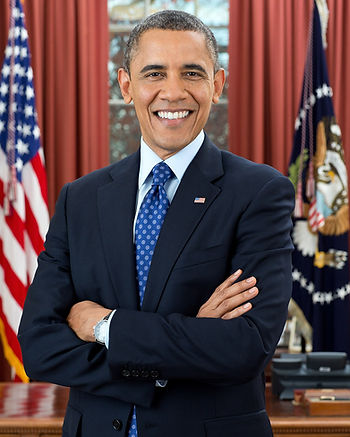
Barack Obama (1961-) was the 44th president of the United States serving from 2009 to 2017. Before becoming president, he worked as a civil rights lawyer before entering politics in Illinois and later serving in the U.S. Senate. His presidency was defined by the Affordable Care Act, the response to the Great Recession, continuing the War on Terror, and efforts to address social and environmental issues.
Barack
Obama
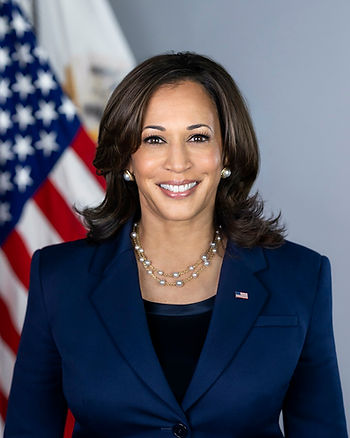

J. D. Vance (1984-) was born and raised in Ohio, served in the Marine Corps, became a lawyer and author, and gained national attention through Hillbilly Elegy. He was elected to the U.S. Senate in 2022 and became Donald Trump's running mate in 2024. Vance became the 50th individual to serve as vice president on January 20, 2025, and remains in office as of 2026.
JD
Vance