

Founding Era
Chapter 6: More Perfect Union 1784 ― 1789


Prolusion 1784-1787
Convention 1787
Ratification 1787-1788
Transition 1788-1789
Independence 1775 ― 1784
Federalist Regime 1789 ― 1801

Documents
Master Index


1862
An open letter urging Abraham Lincoln to enforce existing anti-slavery laws and adopt emancipation as a central war aim, arguing that hesitation toward slavery was undermining the Union cause. It reflects growing Northern pressure to transform the Civil War into a moral and military struggle against slavery, helping set the stage for Lincoln’s shift toward the Emancipation Proclamation.
Horace Greeley
The Prayer of Twenty Millions

1862
In response to Horace Greeley’s public editorial “The Prayer of Twenty Millions,” Abraham Lincoln’s letter clarified that his paramount constitutional duty as president was the preservation of the Union, not the immediate abolition or preservation of slavery as an end in itself. Lincoln emphasized that any action he took regarding slavery — including emancipation — would be justified only insofar as it helped suppress the rebellion and restore national authority, while still affirming his personal wish “that all men, everywhere, could be free.”
Abraham Lincoln
Response Letter to Greeley
Biographies

Al Gore (1948-) was a Tennessee congressman and senator who became Bill Clinton's vice president in 1993 and served two terms. His vice presidency emphasized environmental policy, government reform, and the development of information technology. After leaving office, Gore became a prominent environmental advocate and received the 2007 Nobel Peace Prize jointly with the Intergovernmental Panel on Climate Change.
Al
Gore

Mike Pence (1959-) was an Indiana congressman and governor before becoming vice president under Donald Trump. He served from 2017 to 2021 and chaired the White House Coronavirus Task Force while also presiding over the Senate. His vice presidency concluded with his role in the January 6, 2021 certification of the 2020 presidential election.
Mike
Pence
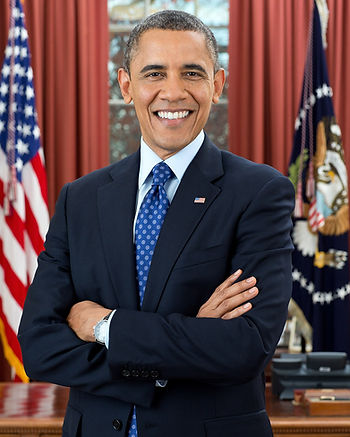
Barack Obama (1961-) was the 44th president of the United States serving from 2009 to 2017. Before becoming president, he worked as a civil rights lawyer before entering politics in Illinois and later serving in the U.S. Senate. His presidency was defined by the Affordable Care Act, the response to the Great Recession, continuing the War on Terror, and efforts to address social and environmental issues.
Barack
Obama
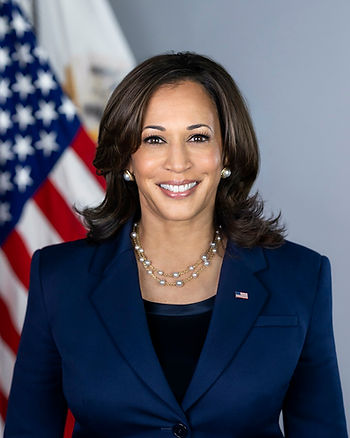

J. D. Vance (1984-) was born and raised in Ohio, served in the Marine Corps, became a lawyer and author, and gained national attention through Hillbilly Elegy. He was elected to the U.S. Senate in 2022 and became Donald Trump's running mate in 2024. Vance became the 50th individual to serve as vice president on January 20, 2025, and remains in office as of 2026.
JD
Vance